More About This Card
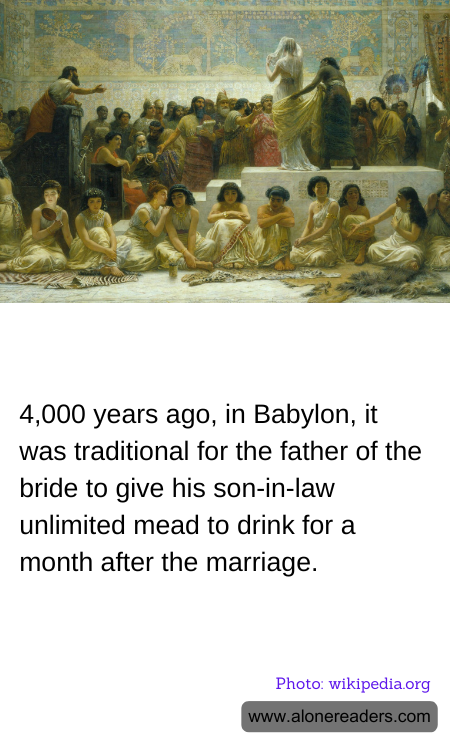
In the ancient world, traditions surrounding marriage were as diverse as the cultures that practiced them. One particularly intriguing custom hails from Babylon, a civilization that flourished around 4,000 years ago in what is now modern-day Iraq. Among the many fascinating aspects of Babylonian culture, the tradition of the bride's father providing his new son-in-law with unlimited mead for a month following the wedding stands out as both unique and symbolic.
Mead, a fermented beverage made from honey, water, and sometimes various fruits and spices, was a popular drink in ancient times. It held a special place in many cultures due to its sweet taste and intoxicating effects. In Babylon, mead was more than just a drink; it was a symbol of prosperity and happiness. The tradition of offering unlimited mead to the groom was not merely an act of generosity but also a gesture laden with meaning. It signified the father-in-law's blessing and his wish for the couple's future to be as sweet and abundant as the honey-based drink.
This month-long period of mead consumption, often referred to as a "honeymoon," was believed to help the newlyweds bond and establish a strong foundation for their marriage. The term "honeymoon" itself is thought to have originated from this practice, with "honey" referring to the mead and "moon" symbolizing the lunar month during which the tradition was observed. This custom highlights the importance placed on the early days of marriage, a time for the couple to enjoy each other's company and begin their life together with joy and celebration.
The Babylonian tradition of gifting mead also underscores the role of the father-in-law in the marriage. By providing this generous gift, he demonstrated his support for the union and his commitment to the well-being of his daughter and her new husband. It was a way to strengthen familial bonds and ensure that the marriage started on a positive note. This practice reflects the broader societal values of the time, where family alliances and relationships were crucial to social stability and prosperity.
While the tradition of offering unlimited mead may seem quaint or even excessive by today's standards, it serves as a fascinating glimpse into the customs and values of ancient Babylonian society. It reminds us of the universal themes of love, family, and celebration that have transcended time and continue to be central to marriage ceremonies around the world. As we explore the rich tapestry of human history, such traditions offer valuable insights into how our ancestors celebrated life's most significant milestones and the enduring importance of community and connection.