More About This Card
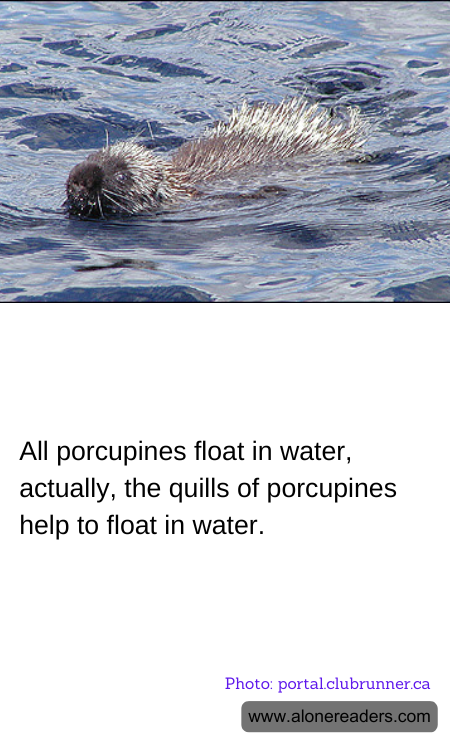
Porcupines are fascinating creatures that have intrigued humans for centuries with their unique defense mechanisms and distinctive appearance. One lesser-known fact about these spiky mammals is their surprising ability to float in water. This buoyancy is largely attributed to their quills, which serve as more than just a protective armor against predators.
The quills of a porcupine are hollow, which is a crucial feature that aids in flotation. These hollow structures trap air, much like a life jacket, allowing the porcupine to stay buoyant in water. This natural adaptation is not only a testament to the porcupine's evolutionary ingenuity but also highlights the diverse ways in which animals have adapted to their environments to survive and thrive.
Porcupines are primarily land-dwelling creatures, often found in forests, deserts, and grasslands across various continents. However, their ability to float provides them with an additional means of escape from predators. If threatened, a porcupine can take to the water, where its quills help keep it afloat, allowing it to swim to safety. This skill is particularly useful in regions where bodies of water are prevalent, offering porcupines an alternative route to evade danger.
The quills themselves are a marvel of nature. While they are primarily known for their defensive role—deterring predators with their sharp, barbed tips—they also serve as an ingenious flotation device. This dual functionality underscores the adaptability of porcupines and the intricate balance of nature, where every feature of an animal can serve multiple purposes.
For those who encounter porcupines in the wild, it is important to appreciate these creatures from a distance. While their quills are not easily detached and do not "shoot" out as some myths suggest, they can still cause injury if handled improperly. Observing a porcupine's ability to float can be a delightful experience, showcasing the wonders of nature and the remarkable adaptations of wildlife.
In conclusion, the porcupine's ability to float is a fascinating aspect of its biology, demonstrating the multifaceted roles that physical adaptations can play in an animal's survival. The hollow quills, primarily a defense mechanism, also provide buoyancy, allowing porcupines to navigate aquatic environments with ease. This unique trait is a reminder of the incredible diversity of life on Earth and the ingenious ways in which animals have evolved to meet the challenges of their habitats.