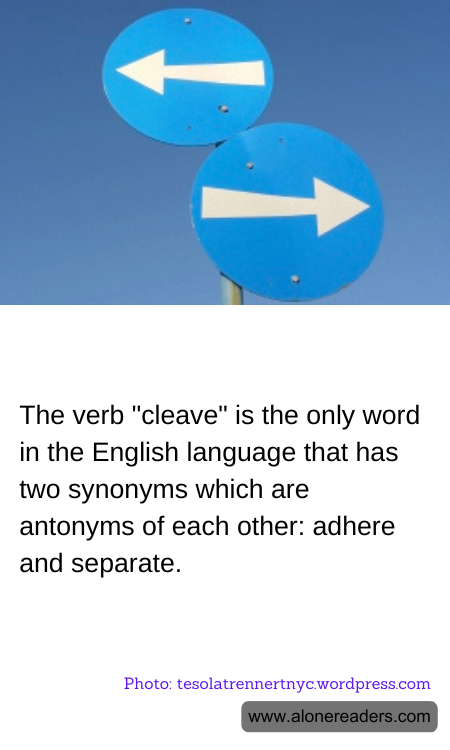
More About This Card
The English language is a fascinating tapestry of words, each with its own history and nuances. Among these words, "cleave" stands out as particularly intriguing due to its unique duality. It is the only word in English that has two synonyms which are antonyms of each other: "adhere" and "separate." This paradoxical nature makes "cleave" a linguistic curiosity worth exploring.
The word "cleave" originates from Old English, where it had two distinct meanings that have persisted into modern usage. On one hand, "cleave" can mean to split or divide something, as in "to cleave wood with an axe." This definition aligns with the idea of separation, where something whole is broken into parts. On the other hand, "cleave" can also mean to cling or adhere closely to something, as in "to cleave to a belief." Here, the word conveys a sense of attachment and unity, the exact opposite of its other meaning.
This duality is not just a quirk of the English language but also a reflection of the complexities of human experience. The ability of a single word to embody both union and division speaks to the multifaceted nature of life itself. In relationships, for example, we often find ourselves cleaving to loved ones, seeking closeness and connection. Yet, there are times when we must cleave away, creating distance to foster growth or protect ourselves. The word "cleave" encapsulates these opposing forces, reminding us of the balance between holding on and letting go.
The existence of such a word also highlights the richness and flexibility of English. It demonstrates how language can evolve to capture the subtleties of human thought and emotion. The dual meanings of "cleave" have been preserved over centuries, suggesting that both concepts are equally important in our communication and understanding of the world.
For language enthusiasts, "cleave" offers a delightful puzzle. It challenges us to consider context and intention, as the meaning of the word shifts dramatically depending on how it is used. This complexity adds depth to our conversations and writings, allowing us to express ideas with precision and nuance.
In a broader sense, the word "cleave" serves as a reminder of the power of language to convey the dualities inherent in life. It encourages us to embrace the contradictions and complexities that define our existence. Whether we are cleaving to something or cleaving away, the word captures the essence of change and continuity, separation and connection.
In conclusion, the verb "cleave" is a remarkable example of the intricacies of the English language. Its ability to mean both "adhere" and "separate" invites us to reflect on the dual nature of many aspects of life. As we navigate our own experiences, "cleave" offers a linguistic tool to articulate the delicate balance between unity and division, making it a word of enduring significance and intrigue.