More About This Card
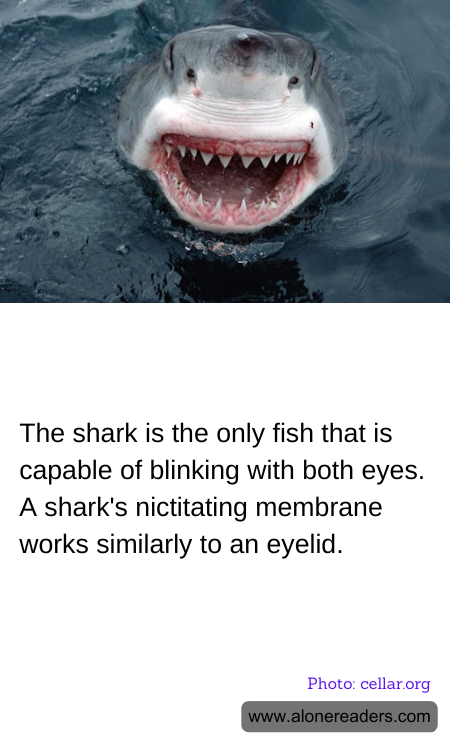
Sharks, the majestic and often misunderstood creatures of the ocean, possess a fascinating feature that sets them apart from other fish: the ability to blink with both eyes. This unique capability is made possible by a specialized structure known as the nictitating membrane, which functions similarly to an eyelid. While most fish lack this protective mechanism, sharks have evolved this feature to enhance their survival in the diverse and often perilous marine environment.
The nictitating membrane is a translucent or opaque third eyelid that can be drawn across the eye for protection and moisture. In sharks, this membrane serves multiple purposes. Primarily, it acts as a shield during feeding, safeguarding the eyes from thrashing prey and potential injury. This is particularly crucial for species like the great white shark, which often engage in high-speed pursuits and violent encounters with their prey. The membrane also helps to keep the eyes moist and free from debris, which is essential for maintaining clear vision underwater.
Interestingly, not all sharks possess a nictitating membrane. Some species, such as the great white shark, rely on other methods to protect their eyes, like rolling them back into their sockets during an attack. However, for those that do have this membrane, it provides a significant advantage in their predatory lifestyle. The ability to blink with both eyes allows sharks to maintain visual awareness of their surroundings, even in the midst of a chaotic hunt.
The presence of the nictitating membrane in sharks highlights the incredible adaptability and evolutionary success of these ancient creatures. Sharks have roamed the oceans for over 400 million years, and their ability to evolve specialized features like the nictitating membrane has played a crucial role in their survival. This adaptation not only enhances their hunting efficiency but also contributes to their overall resilience in the face of environmental changes.
For humans, understanding the unique adaptations of sharks can foster a greater appreciation for these remarkable animals. Despite their fearsome reputation, sharks are an integral part of marine ecosystems, playing a vital role in maintaining the balance of oceanic food chains. By learning about their unique features, such as the nictitating membrane, we can better appreciate the complexity and diversity of life beneath the waves.
In conclusion, the ability of sharks to blink with both eyes through the use of a nictitating membrane is a testament to their evolutionary ingenuity. This adaptation not only provides protection and clarity of vision but also underscores the remarkable ways in which sharks have thrived in the ocean's depths. As we continue to explore and understand the natural world, the study of such unique features in marine life can inspire awe and respect for the intricate web of life that inhabits our planet.