More About This Card
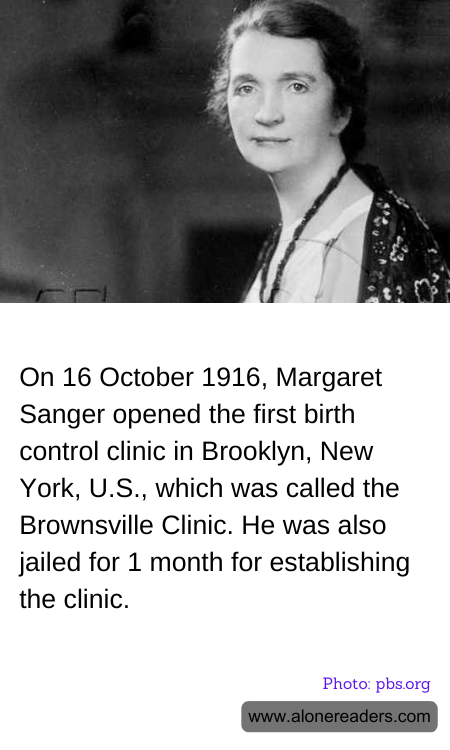
On October 16, 1916, a significant milestone in the history of reproductive rights was marked by the opening of the first birth control clinic in the United States. This pioneering establishment, known as the Brownsville Clinic, was founded by Margaret Sanger in Brooklyn, New York. Sanger, a nurse and women's rights advocate, was driven by her belief that women should have the autonomy to decide when and if they wanted to have children. Her efforts were not only groundbreaking but also controversial, leading to her arrest and a month-long imprisonment.
The Brownsville Clinic was a modest affair, set up in a small storefront in a predominantly immigrant neighborhood. It was staffed by Sanger, her sister Ethel Byrne, and a volunteer interpreter. The clinic aimed to provide women with information and access to contraceptives, which were largely unavailable and illegal under the Comstock Laws of the time. These laws classified contraceptive information and devices as obscene, making it a criminal offense to distribute them. Despite the legal risks, Sanger was determined to offer women the knowledge and means to control their reproductive lives.
The clinic quickly became a beacon of hope for many women who were seeking to manage their family size and improve their health. Within the first ten days, over 400 women visited the clinic, highlighting the desperate need for such services. However, the clinic's operations were short-lived. On October 26, 1916, just ten days after its opening, the clinic was raided by the police. Sanger and her colleagues were arrested for violating the Comstock Laws. The arrest and subsequent trial drew national attention, sparking a public debate about women's rights and access to birth control.
Margaret Sanger's imprisonment did not deter her resolve. Instead, it galvanized the birth control movement, drawing support from various quarters, including medical professionals and women's rights activists. Her trial became a platform to challenge the existing laws and advocate for women's reproductive rights. Although the Brownsville Clinic was shut down, Sanger's efforts laid the groundwork for future advancements in birth control access and women's health.
Sanger's legacy is profound, as her work eventually led to the establishment of organizations like Planned Parenthood and the eventual legalization and widespread availability of contraceptives. Her courage and determination in the face of legal and societal opposition were instrumental in changing the landscape of women's health and rights. Today, Margaret Sanger is remembered as a pivotal figure in the fight for reproductive freedom, and the opening of the Brownsville Clinic remains a landmark event in the history of women's rights.