More About This Card
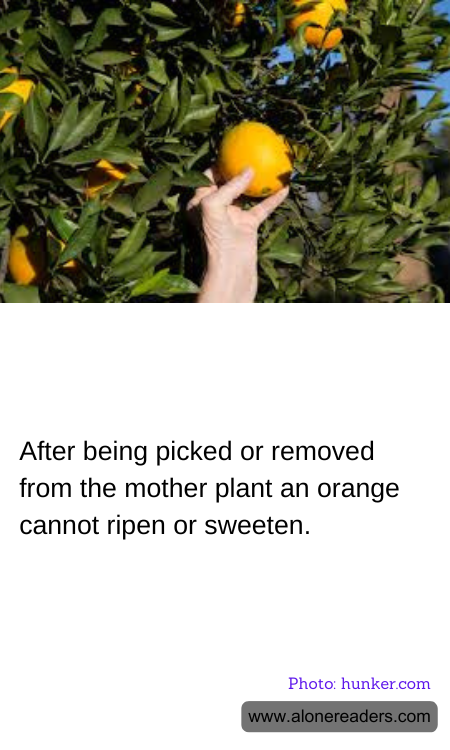
Oranges are a beloved fruit worldwide, known for their vibrant color, refreshing taste, and nutritional benefits. However, a lesser-known fact about oranges is that once they are picked or removed from the mother plant, they cannot ripen or sweeten further. This characteristic sets oranges apart from some other fruits, such as bananas or avocados, which continue to ripen after being harvested.
The ripening process in fruits is typically driven by the production of ethylene gas, a natural plant hormone that triggers the conversion of starches into sugars, enhancing the fruit's sweetness and altering its texture. However, oranges, along with other citrus fruits, do not rely on ethylene in the same way. Instead, they reach their peak ripeness while still attached to the tree. This means that the sweetness and flavor of an orange are determined entirely by the conditions during its growth on the tree, including factors such as sunlight, temperature, and soil quality.
Once an orange is picked, its sugar content and acidity levels remain unchanged. This is why selecting oranges at the right time is crucial for ensuring optimal taste. Farmers and harvesters must be adept at determining the perfect moment to pick the fruit, often relying on visual cues such as color and size, as well as taste tests. The inability of oranges to ripen post-harvest underscores the importance of careful cultivation and timing in the agricultural process.
For consumers, this means that when purchasing oranges, it's essential to choose ones that are already ripe and sweet. Look for oranges that feel heavy for their size, as this often indicates juiciness. The skin should be firm and have a bright, vibrant color, although some varieties may have a slightly greenish hue even when ripe. Avoid oranges with soft spots or blemishes, as these can be signs of spoilage.
Understanding the ripening characteristics of oranges can also help reduce food waste. Since oranges do not improve in flavor after being picked, storing them for extended periods in hopes of them sweetening is futile. Instead, they should be consumed relatively soon after purchase to enjoy their full flavor and nutritional benefits.
In conclusion, the unique ripening process of oranges highlights the intricate relationship between nature and agriculture. By appreciating the nuances of how oranges develop their sweetness, consumers can make more informed choices and enjoy this delightful fruit at its best. Whether enjoyed fresh, juiced, or as part of a culinary creation, a perfectly ripe orange is a testament to the art and science of fruit cultivation.