More About This Card
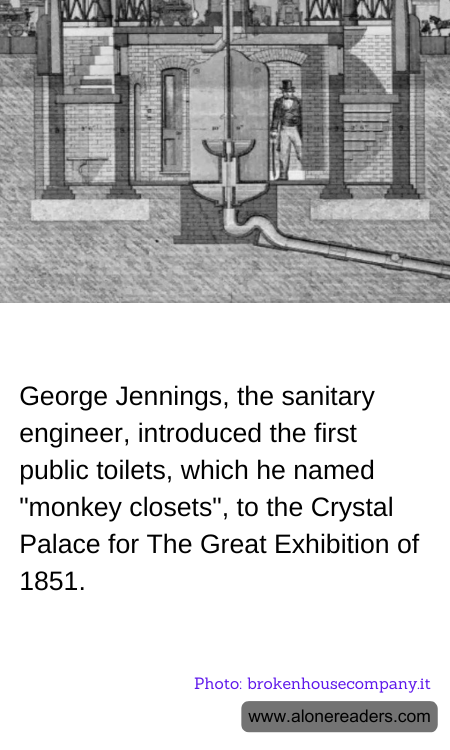
In the mid-19th century, a remarkable innovation in public sanitation emerged, thanks to the ingenuity of George Jennings, a pioneering sanitary engineer. Jennings introduced the world to the first public toilets, which he whimsically named "monkey closets." This groundbreaking development took place at the Crystal Palace during The Great Exhibition of 1851, a pivotal event that showcased the marvels of the Industrial Revolution and drew millions of visitors from around the globe.
The Great Exhibition, held in Hyde Park, London, was a grand display of culture and industry, attracting an estimated six million visitors over its five-month duration. With such a massive influx of people, the need for adequate sanitary facilities became apparent. George Jennings seized this opportunity to demonstrate his innovative approach to public sanitation. His "monkey closets" were a series of public conveniences that offered a clean and private space for visitors to attend to their needs, a concept that was revolutionary at the time.
Jennings' public toilets were not only a practical solution but also a testament to the Victorian era's commitment to progress and public health. The facilities were equipped with flushing mechanisms, a significant advancement over the rudimentary and often unsanitary options available before. For a modest fee of one penny, visitors could use these facilities, leading to the popular phrase "to spend a penny," which became synonymous with using the toilet.
The introduction of these public toilets marked a significant shift in societal attitudes towards hygiene and public health. Prior to Jennings' innovation, public sanitation was often neglected, leading to unsanitary conditions that contributed to the spread of disease. By providing a clean and accessible option, Jennings not only improved the experience for visitors to the exhibition but also set a precedent for future public sanitation efforts.
George Jennings' contribution to public health and sanitation extended beyond The Great Exhibition. His work laid the foundation for modern public restroom facilities, influencing the design and implementation of sanitary systems in urban areas worldwide. The success of the "monkey closets" demonstrated the importance of investing in public infrastructure to improve the quality of life for all citizens.
In retrospect, the introduction of public toilets at The Great Exhibition of 1851 was more than just a convenience; it was a catalyst for change in public health and urban planning. George Jennings' vision and innovation continue to resonate today, reminding us of the importance of sanitation in our daily lives and the impact that thoughtful engineering can have on society. His legacy lives on in the modern conveniences we often take for granted, a testament to the enduring power of innovation and progress.