More About This Card
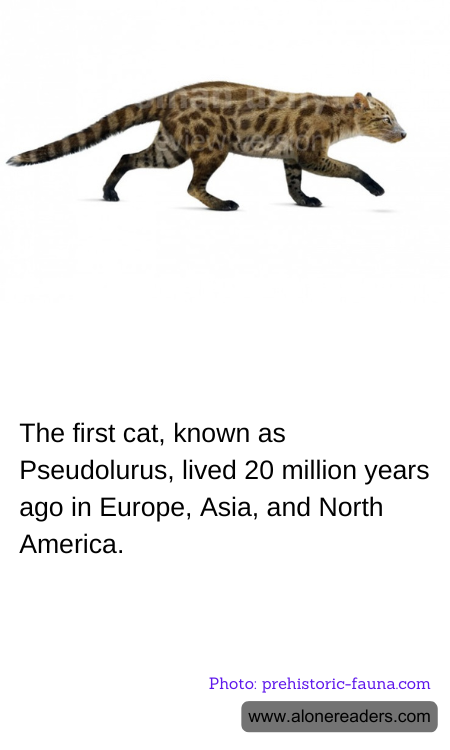
Long before the domestic cats we know and love today began to purr their way into our homes, their ancient ancestors roamed the Earth, leaving a significant mark on the evolutionary timeline. Among these early felines was Pseudolurus, a genus that lived approximately 20 million years ago during the Miocene epoch. This remarkable creature is considered one of the earliest known ancestors of modern cats, and its existence provides fascinating insights into the evolutionary journey of the Felidae family.
Pseudolurus inhabited a world vastly different from the one we know today. During the Miocene, the continents were positioned differently, and the climate was warmer and more humid. This environment allowed for the flourishing of diverse ecosystems, which in turn supported a wide range of animal life. Pseudolurus thrived in these conditions, spreading across Europe, Asia, and North America. Its presence on multiple continents suggests that it was a highly adaptable species, capable of surviving in various habitats.
The physical characteristics of Pseudolurus were quite distinct from those of modern cats. While specific details about its appearance remain somewhat speculative due to the limited fossil record, it is believed that Pseudolurus had a more elongated body and limbs compared to today's felines. These features likely aided in its agility and hunting prowess, allowing it to capture prey efficiently. Its diet would have consisted of small mammals and possibly birds, similar to the dietary habits of contemporary wild cats.
The evolutionary significance of Pseudolurus cannot be overstated. As one of the earliest members of the Felidae family, it represents a crucial link in the lineage that eventually led to the diverse array of cat species we see today. Over millions of years, descendants of Pseudolurus would undergo numerous adaptations, leading to the emergence of various feline species, including the majestic big cats like lions and tigers, as well as the smaller, more familiar domestic cats.
Understanding the history of Pseudolurus and its role in the evolution of cats enriches our appreciation for these remarkable animals. It highlights the incredible adaptability and resilience of the Felidae family, which has allowed them to survive and thrive across different epochs and environments. As we continue to study the fossil record and uncover more about these ancient creatures, we gain valuable insights into the natural history of our planet and the intricate web of life that has shaped the world as we know it.
In a world where the past often informs the present, the story of Pseudolurus serves as a reminder of the enduring legacy of evolution. It invites us to marvel at the wonders of nature and to cherish the rich tapestry of life that continues to evolve around us. Whether you're a cat enthusiast or simply curious about the history of life on Earth, the tale of Pseudolurus offers a captivating glimpse into the ancient origins of one of humanity's most beloved animal companions.