More About This Card
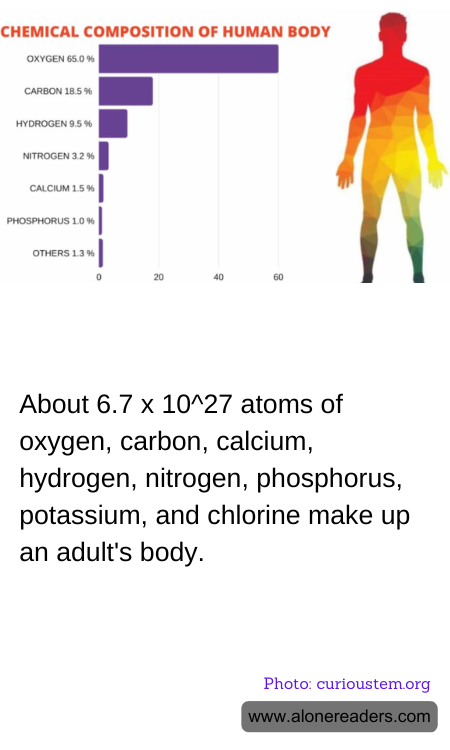
The human body is a marvel of biological engineering, a complex system composed of countless cells, tissues, and organs working in harmony. At the most fundamental level, this intricate machine is built from atoms, the basic units of matter. An adult human body is composed of approximately 6.7 x 10^27 atoms, a number so vast it is almost beyond comprehension. These atoms come together to form the essential elements that sustain life: oxygen, carbon, calcium, hydrogen, nitrogen, phosphorus, potassium, and chlorine.
Oxygen is the most abundant element in the human body, making up about 65% of our mass. It is a critical component of water, which constitutes a significant portion of our body weight, and is vital for cellular respiration, the process by which our cells produce energy. Carbon, the backbone of all organic molecules, accounts for 18% of our body mass. It forms the structural framework of proteins, carbohydrates, lipids, and nucleic acids, the molecules that carry genetic information and perform essential biological functions.
Hydrogen, the lightest and most abundant element in the universe, is also a major component of the human body, contributing to the structure of water and organic compounds. Nitrogen, making up about 3% of our body mass, is a key element in amino acids, the building blocks of proteins, and nucleic acids like DNA and RNA. These molecules are crucial for growth, repair, and the transmission of genetic information.
Calcium, although only about 1.5% of our body mass, plays a vital role in maintaining strong bones and teeth. It is also essential for muscle function, nerve transmission, and blood clotting. Phosphorus, another critical element, is involved in energy production and is a component of ATP, the energy currency of cells. It also contributes to the structural integrity of cell membranes and bones.
Potassium and chlorine, though present in smaller amounts, are indispensable for maintaining cellular function. Potassium is crucial for nerve impulse transmission and muscle contraction, while chlorine helps maintain fluid balance and is a component of stomach acid, which aids in digestion.
Together, these elements form the building blocks of life, each playing a unique role in maintaining the delicate balance required for health and vitality. Understanding the atomic composition of the human body not only highlights the complexity of our biological makeup but also underscores the interconnectedness of life and the universe. Every atom in our body has a story, originating from the stars and coming together to create the miracle of life. This perspective invites us to appreciate the intricate beauty of our existence and the remarkable processes that sustain it.