More About This Card
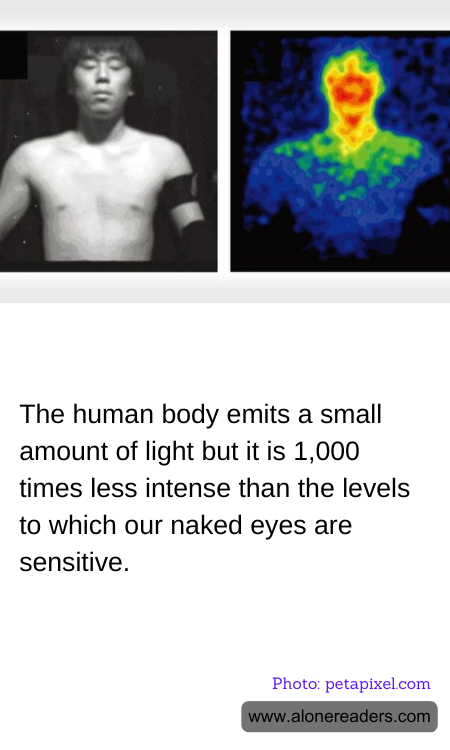
The human body is a marvel of biological engineering, constantly engaging in processes that sustain life. Among its many fascinating features is the fact that it emits a small amount of light. This phenomenon, known as bioluminescence, is not unique to humans but is a common trait among living organisms. However, the light emitted by the human body is 1,000 times less intense than the levels detectable by the naked eye, making it an invisible glow that remains largely unnoticed in our daily lives.
Bioluminescence in humans is primarily a result of metabolic reactions. As our cells metabolize food to produce energy, they generate free radicals. These free radicals interact with certain molecules in the body, creating a byproduct that emits photons, or light particles. This light emission is a natural part of the body's metabolic processes and occurs continuously, although it is far too faint for us to see without the aid of specialized equipment.
Scientific studies have confirmed the existence of this faint glow. Using highly sensitive cameras, researchers have been able to capture images of the light emitted by the human body. These studies have shown that the intensity of the light varies throughout the day, peaking in the late afternoon and diminishing during the night. This variation is thought to be linked to the body's circadian rhythms, which regulate our sleep-wake cycles and other physiological processes.
While the light emitted by the human body is not visible to the naked eye, it serves as a reminder of the intricate and dynamic nature of our biological systems. It highlights the fact that even the most mundane aspects of our physiology are imbued with complexity and wonder. Moreover, understanding this phenomenon could have practical applications in the field of medicine. For instance, changes in the intensity or pattern of bioluminescence could potentially be used as indicators of certain health conditions, offering a non-invasive method for monitoring physiological changes.
The concept of the human body emitting light might seem like something out of science fiction, but it is a real and scientifically validated phenomenon. It underscores the fact that there is still much to learn about the human body and its capabilities. As research continues to delve into the mysteries of bioluminescence, we may uncover new insights into the fundamental processes that sustain life. For now, the invisible glow of the human body remains a testament to the hidden wonders that lie beneath the surface of our everyday existence.