More About This Card
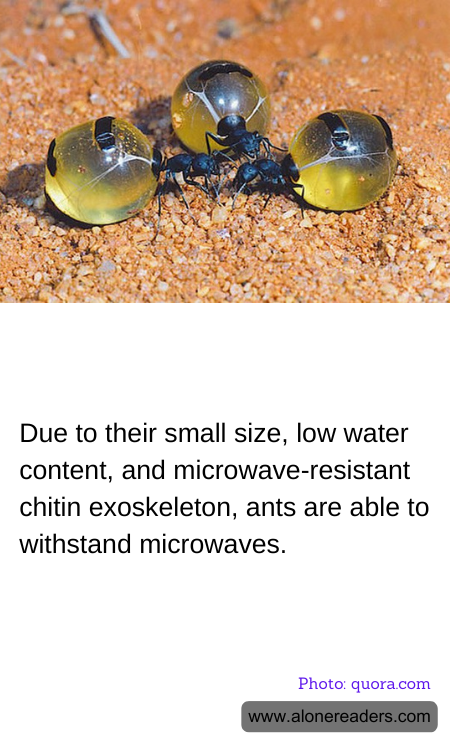
Ants are fascinating creatures that have adapted to survive in a variety of environments, including some that might seem inhospitable to other forms of life. One of the more intriguing aspects of their resilience is their ability to withstand microwaves, a phenomenon that can be attributed to several unique biological features.
Firstly, ants are incredibly small, which plays a significant role in their ability to endure microwave radiation. Microwaves work by agitating water molecules to generate heat, and because ants have a relatively low water content compared to larger organisms, they are less susceptible to the heating effects of microwaves. This low water content means that there is less material for the microwaves to act upon, reducing the potential for harm.
Moreover, ants possess a chitin exoskeleton, which is a tough, protective outer layer that covers their bodies. Chitin is a natural polymer that is not only lightweight and durable but also resistant to microwave radiation. This exoskeleton acts as a shield, providing an additional layer of protection against the potential damage microwaves could cause. The resilience of chitin is one of the reasons ants can survive in environments where other insects might not.
The combination of their small size, low water content, and protective exoskeleton allows ants to endure conditions that would be detrimental to many other organisms. This ability to withstand microwaves is not just a curious fact but also a testament to the incredible adaptability of ants. Their survival strategies have evolved over millions of years, enabling them to thrive in diverse habitats across the globe.
While the idea of ants surviving microwaves might seem like a trivial curiosity, it underscores the broader theme of nature's ingenuity. Ants, like many other creatures, have developed unique adaptations that allow them to survive and flourish in a world full of challenges. Their resilience is a reminder of the complexity and wonder of the natural world, where even the smallest creatures have evolved remarkable ways to endure and succeed.
In conclusion, the ability of ants to withstand microwaves is a fascinating example of biological adaptation. Their small size, low water content, and microwave-resistant chitin exoskeleton combine to make them remarkably resilient. This resilience not only highlights the adaptability of ants but also serves as a reminder of the intricate and often surprising ways in which life on Earth has evolved to meet the challenges of survival.