More About This Card
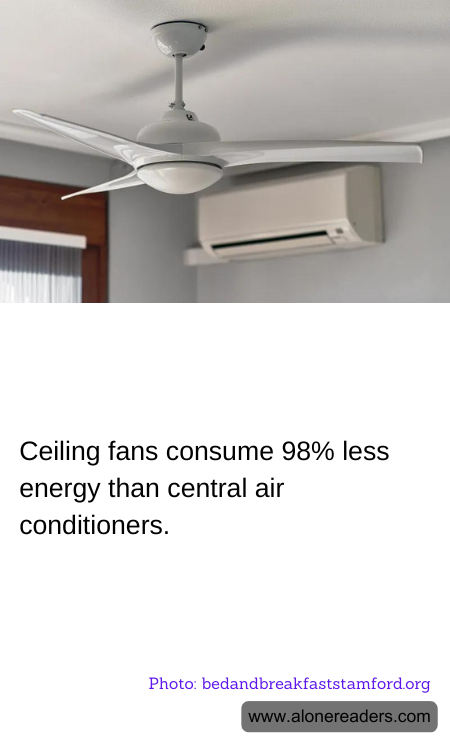
In an era where energy conservation is becoming increasingly important, the choice between ceiling fans and central air conditioners can have a significant impact on both the environment and your utility bills. Ceiling fans, often overlooked in favor of more modern cooling systems, offer a remarkably energy-efficient alternative to central air conditioners. In fact, ceiling fans consume up to 98% less energy than their more power-hungry counterparts, making them an attractive option for those looking to reduce their carbon footprint and save on energy costs.
Ceiling fans operate by circulating air within a room, creating a wind-chill effect that can make the space feel up to 4 degrees cooler. This simple yet effective mechanism requires significantly less energy than the complex systems used in central air conditioning units. While a typical central air conditioner can consume between 2,000 to 5,000 watts of electricity per hour, a ceiling fan uses only about 15 to 90 watts, depending on the speed setting. This stark difference in energy consumption not only translates to lower electricity bills but also reduces the demand on power grids, contributing to a more sustainable energy future.
Moreover, ceiling fans offer versatility and ease of use that central air conditioners cannot match. They can be installed in virtually any room, providing localized cooling where it is needed most. This allows homeowners to target specific areas rather than cooling the entire house, further enhancing energy efficiency. Additionally, ceiling fans can be used in conjunction with air conditioning systems to maximize comfort while minimizing energy use. By setting the thermostat a few degrees higher and using ceiling fans to circulate the air, homeowners can achieve the same level of comfort with less energy consumption.
The environmental benefits of choosing ceiling fans over central air conditioners are also noteworthy. Reduced energy consumption means fewer greenhouse gas emissions, which are a major contributor to climate change. By opting for ceiling fans, individuals can play a part in reducing the overall carbon footprint of their household. This small change, when adopted by many, can lead to significant environmental benefits.
In conclusion, ceiling fans present a compelling case for those seeking an energy-efficient and environmentally friendly cooling solution. Their ability to consume up to 98% less energy than central air conditioners makes them an ideal choice for eco-conscious individuals and families. By embracing this simple yet effective technology, we can enjoy comfortable living spaces while contributing to a more sustainable future. Whether used alone or in conjunction with other cooling systems, ceiling fans offer a practical and cost-effective way to stay cool and reduce energy consumption.