More About This Card
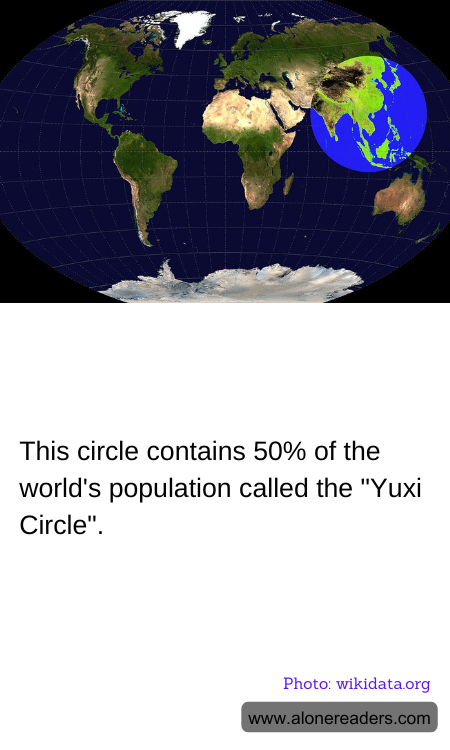
In the vast expanse of our planet, there exists a geographical anomaly that captivates demographers and geographers alike: the Yuxi Circle. This intriguing concept refers to a circle on the world map that encompasses a region containing 50% of the global population. Named after the city of Yuxi in China, this circle highlights the dense concentration of humanity in a relatively small area of the world.
The Yuxi Circle is centered in Asia, a continent known for its rich tapestry of cultures, languages, and histories. Within this circle lie some of the most populous countries on Earth, including China, India, Indonesia, Bangladesh, and Japan. These nations alone account for billions of people, contributing significantly to the circle's demographic weight. The circle also includes parts of Southeast Asia, the eastern fringes of Russia, and even stretches to include parts of the Middle East. This region is not only a hub of human activity but also a melting pot of diverse traditions and economic dynamism.
The reasons behind this dense population distribution are manifold. Historically, the fertile lands of the Indus, Ganges, and Yangtze river valleys supported the growth of ancient civilizations, which laid the groundwork for the dense populations we see today. The climate in many parts of this circle is conducive to agriculture, which has historically supported large populations. Additionally, the rapid industrialization and urbanization in countries like China and India have further accelerated population growth in these areas.
The Yuxi Circle is not just a demographic curiosity; it also poses significant challenges and opportunities. The concentration of such a large portion of the world's population in this area means that issues like resource management, environmental sustainability, and urban planning are of paramount importance. Governments and organizations within this circle must navigate the complexities of providing for their burgeoning populations while ensuring economic growth and environmental conservation.
On the flip side, the Yuxi Circle is a testament to human resilience and innovation. It is home to some of the world's fastest-growing economies, technological advancements, and cultural innovations. The sheer diversity within this circle fosters a rich exchange of ideas and traditions, contributing to a global cultural mosaic that is as vibrant as it is varied.
In conclusion, the Yuxi Circle is a fascinating geographical and demographic phenomenon that underscores the complexities and wonders of human civilization. It serves as a reminder of the interconnectedness of our world and the shared challenges and opportunities that come with such a dense concentration of humanity. As we move forward, understanding and addressing the dynamics within this circle will be crucial for fostering a sustainable and harmonious global future.