More About This Card
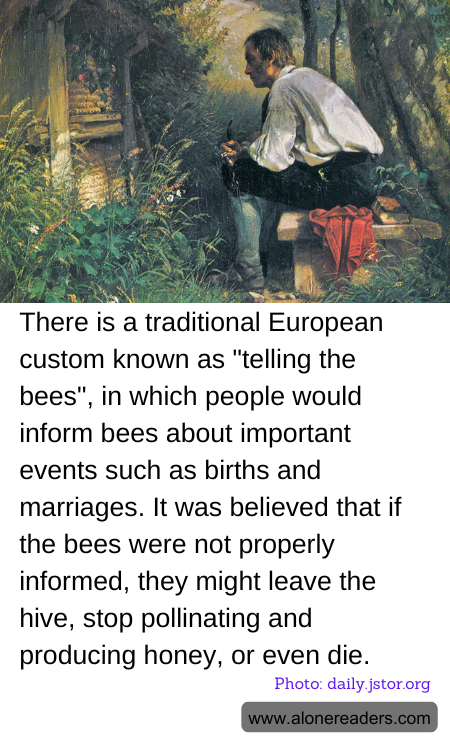
In the tapestry of European folklore, there exists a charming and poignant tradition known as "telling the bees." This custom, steeped in centuries of agrarian life, reflects the deep bond between humans and nature, particularly the symbiotic relationship with bees. For generations, it was believed that bees, those industrious pollinators, were not mere insects but sentient beings deserving of respect and communication. The tradition of "telling the bees" involved informing them of significant life events such as births, marriages, and even deaths. This practice was not just a quaint ritual but a vital part of rural life, believed to ensure the prosperity and continuity of the hive.
The origins of "telling the bees" are somewhat obscure, but the practice is documented across various parts of Europe, including England, Ireland, and parts of Germany. The custom likely emerged from the observation of bees' crucial role in agriculture and their mysterious, almost magical, behavior. Bees were seen as messengers between the natural and spiritual worlds, and their well-being was closely tied to the fortunes of the household. If the bees were not properly informed of changes in the family, it was feared they might abandon the hive, cease their pollination duties, or even die, leading to dire consequences for the crops and the community.
The act of "telling the bees" was often performed with great ceremony. A family member, usually the head of the household, would approach the hive and gently tap on it to get the bees' attention. In a soft voice, they would relay the news, whether joyous or sorrowful. During weddings, the bees might be informed of the union and even offered a slice of wedding cake. In the case of a death, the hives might be draped in black crepe, and the bees would be told of the passing, sometimes in rhyming couplets. This ritual underscored the belief that bees were part of the family, sharing in its joys and sorrows.
While modern science has demystified much about bees, revealing their complex social structures and vital ecological roles, the tradition of "telling the bees" endures as a reminder of our interconnectedness with nature. It highlights a time when people lived in closer harmony with the earth, acknowledging the unseen threads that bind all living things. In an era where the plight of bees is a growing concern due to habitat loss and environmental changes, this ancient custom resonates with contemporary efforts to protect and preserve these essential pollinators.
Today, "telling the bees" serves as a metaphor for mindfulness and respect for the natural world. It invites us to pause and consider the impact of our actions on the environment and to honor the age-old relationship between humans and bees. As we strive to create a sustainable future, the wisdom of this tradition reminds us that, like the bees, we are all part of a larger, interconnected ecosystem.