More About This Card
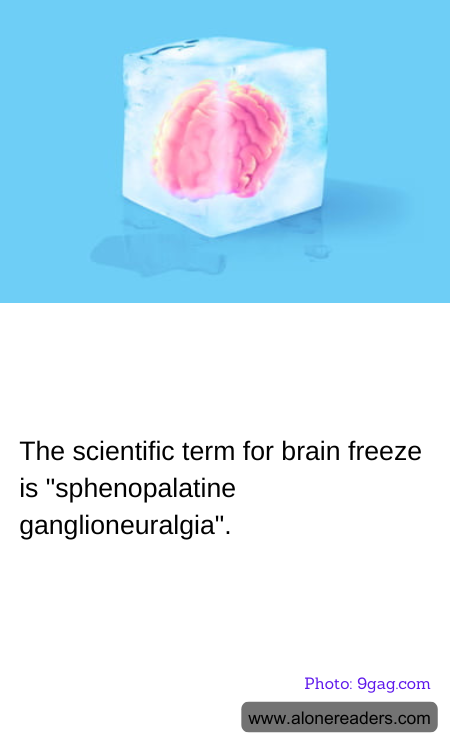
Brain freeze, a common yet fleeting sensation that many have experienced, is scientifically known as "sphenopalatine ganglioneuralgia." This term may sound daunting, but it simply refers to the brief headache that occurs when something cold touches the roof of the mouth. Despite its intimidating name, this phenomenon is a harmless reaction that occurs when the body tries to protect itself from sudden temperature changes.
When you consume something cold, like ice cream or a chilled beverage, it can cause the blood vessels in the roof of your mouth, or palate, to constrict and then rapidly dilate. This sudden change triggers pain receptors in the area, which send signals to the brain through the trigeminal nerve, a major facial nerve responsible for sensation. The brain interprets these signals as pain, resulting in the sensation we call brain freeze.
Interestingly, the pain from a brain freeze is often felt in the forehead rather than the mouth. This is due to the trigeminal nerve's extensive network, which also covers the forehead. The brain's misinterpretation of the pain's origin is a classic example of referred pain, where discomfort is perceived in a location different from its actual source.
While brain freeze is a temporary and benign condition, it can be quite uncomfortable. Fortunately, it is easy to prevent and alleviate. To avoid brain freeze, try consuming cold foods and drinks slowly, allowing your mouth to acclimate to the temperature. If you do experience brain freeze, pressing your tongue against the roof of your mouth or sipping warm water can help warm the area and alleviate the pain more quickly.
Understanding the science behind sphenopalatine ganglioneuralgia not only demystifies the experience but also highlights the body's intricate response mechanisms. This knowledge can be particularly useful for those who frequently indulge in cold treats and wish to enjoy them without discomfort. While brain freeze is a minor inconvenience, it serves as a fascinating reminder of the complex ways our bodies react to everyday stimuli.