More About This Card
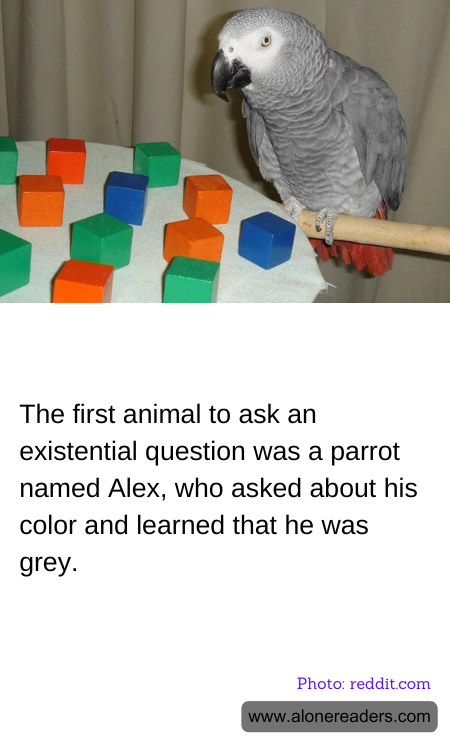
In the realm of animal intelligence, few stories are as captivating as that of Alex, the African Grey Parrot, who astonished the world with his cognitive abilities. Alex was not just any parrot; he was a pioneer in the study of animal cognition and communication, challenging the boundaries of what we believed animals were capable of understanding and expressing. His story is a testament to the profound and often underestimated intelligence of non-human creatures.
Alex was the subject of a thirty-year experiment conducted by animal psychologist Dr. Irene Pepperberg. From the moment he entered the lab, Alex demonstrated an uncanny ability to learn and communicate in ways that were previously thought to be exclusive to humans. He could identify colors, shapes, and numbers, and even had a vocabulary of over 100 words. However, what truly set Alex apart was his ability to ask questions, a trait that was once considered a hallmark of human cognition.
One day, Alex posed a question that would forever change the way we perceive animal intelligence. He asked, "What color?" while looking at himself in a mirror. This simple yet profound inquiry marked the first time an animal had asked an existential question about itself. Dr. Pepperberg responded by telling Alex that he was grey. This interaction was groundbreaking, as it suggested that Alex had a sense of self-awareness and curiosity about his own existence, traits that are often associated with higher cognitive processes.
Alex's question about his color was more than just a demonstration of his ability to communicate; it was a window into the complex inner world of animals. It challenged the long-held belief that animals are merely instinct-driven beings, incapable of introspection or abstract thought. Alex's curiosity about his appearance indicated a level of self-recognition and an understanding of his individuality, traits that are rare in the animal kingdom.
The implications of Alex's question extend beyond the realm of scientific inquiry. They invite us to reconsider our relationship with animals and the natural world. If a parrot can exhibit such profound cognitive abilities, what does that say about the potential intelligence of other species? Alex's story encourages us to approach animals with greater empathy and respect, recognizing that they may possess a depth of understanding that we are only beginning to comprehend.
In the years following Alex's groundbreaking question, his legacy has continued to inspire researchers and animal lovers alike. His story serves as a reminder of the incredible potential for communication and understanding between humans and animals. As we continue to explore the mysteries of animal cognition, Alex's question remains a poignant symbol of the quest for knowledge and the enduring bond between species.