More About This Card
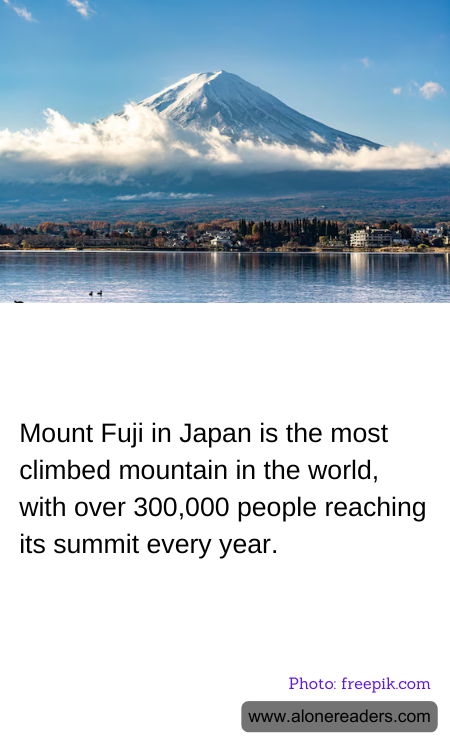
Mount Fuji, Japan's iconic peak, stands as a testament to nature's grandeur and human determination. Rising to 3,776 meters, this majestic mountain is not only a symbol of Japan but also the most climbed mountain in the world. Each year, over 300,000 adventurers from across the globe embark on the journey to its summit, drawn by its beauty, cultural significance, and the personal challenge it presents.
The allure of Mount Fuji is multifaceted. For many, the mountain holds spiritual significance. It is considered one of Japan's "Three Holy Mountains," and has been a site of pilgrimage for centuries. The climb is often seen as a rite of passage, a journey that offers both physical and spiritual rewards. The mountain's near-perfect symmetrical cone has inspired countless artists and poets, further embedding it into the cultural fabric of Japan.
Climbing Mount Fuji is an experience that combines natural beauty with a sense of accomplishment. The official climbing season runs from early July to early September, when the weather is most favorable and the mountain huts are open. During this period, climbers can choose from several routes, with the Yoshida Trail being the most popular due to its accessibility and facilities. The ascent typically begins at night, allowing climbers to reach the summit in time to witness the breathtaking sunrise, known as "Goraiko." This spectacle, where the first light of day paints the sky in hues of orange and pink, is a reward that makes the arduous climb worthwhile.
Despite its popularity, the climb is not without its challenges. The thin air at high altitudes can make breathing difficult, and the steep, rocky paths require careful navigation. However, the trails are well-marked, and the presence of fellow climbers creates a sense of camaraderie and shared purpose. Many climbers describe the experience as transformative, a journey that tests their limits and leaves them with a profound sense of achievement.
Mount Fuji's popularity as a climbing destination has also brought attention to the importance of preserving its natural environment. Efforts are ongoing to manage the impact of tourism, with initiatives aimed at maintaining the trails and minimizing litter. Climbers are encouraged to respect the mountain by following the principle of "leave no trace," ensuring that its beauty can be enjoyed by future generations.
In conclusion, Mount Fuji is more than just a mountain; it is a symbol of endurance, beauty, and cultural heritage. Its status as the most climbed mountain in the world is a testament to its universal appeal. Whether drawn by the challenge, the spiritual journey, or the stunning vistas, those who reach its summit carry with them memories of an unforgettable adventure. As they stand atop this iconic peak, they become part of a long tradition of climbers who have been captivated by the magic of Mount Fuji.