More About This Card
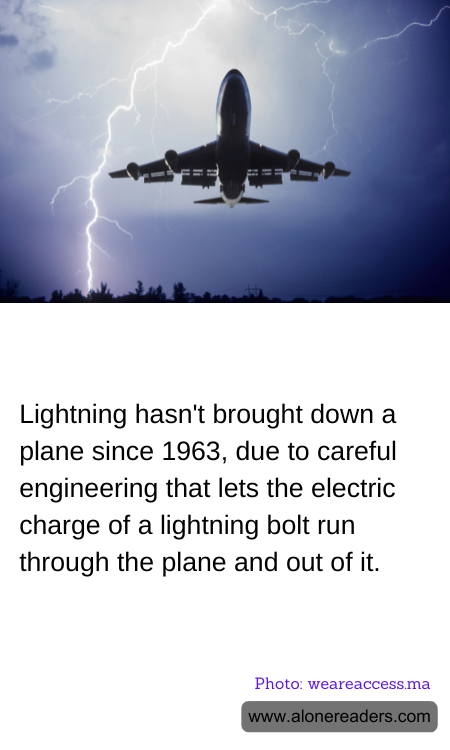
In the annals of aviation history, the year 1963 marks a significant milestone. It was the last time a lightning strike brought down an aircraft, a testament to the remarkable advancements in engineering and safety protocols that have since been implemented. Today, airplanes are designed with sophisticated systems that allow them to withstand the formidable power of a lightning bolt, ensuring the safety of passengers and crew alike.
Lightning strikes on airplanes are more common than one might think, with each commercial aircraft being struck approximately once a year. However, thanks to meticulous engineering, these strikes rarely pose a threat. The key lies in the aircraft's ability to channel the electric charge safely through its structure and back into the atmosphere. This is achieved through a concept known as the Faraday cage effect, where the aircraft's metal body acts as a shield, allowing the electricity to flow around the exterior without penetrating the cabin.
The process begins when a lightning bolt attaches itself to the aircraft, typically at a point like the nose or wingtip. The charge then travels along the aircraft's conductive skin, following a path of least resistance, and exits at another extremity, such as the tail. This seamless transfer of electricity is facilitated by the use of conductive materials and bonding techniques that ensure all parts of the aircraft are electrically connected. As a result, the interior of the plane remains unaffected, and passengers are often unaware that a strike has occurred.
Modern aircraft are also equipped with advanced lightning protection systems. These include static wicks, which are small, rod-like devices attached to the trailing edges of the wings and tail. Static wicks help dissipate the static electricity that builds up during flight, reducing the likelihood of a lightning strike. Additionally, critical components such as fuel tanks and avionics are shielded with non-conductive materials to prevent any potential damage from electrical surges.
The rigorous testing and certification processes that aircraft undergo further ensure their resilience against lightning. Manufacturers subject planes to simulated lightning strikes, assessing their ability to withstand and safely channel the electrical energy. These tests are crucial in identifying potential vulnerabilities and refining the design to enhance safety.
The success of these engineering feats is reflected in the impeccable safety record of modern aviation. Despite the frequency of lightning strikes, the last six decades have seen no aircraft crashes attributed to them. This achievement underscores the importance of continuous innovation and adherence to stringent safety standards in the aviation industry.
In conclusion, the ability of airplanes to withstand lightning strikes is a remarkable example of human ingenuity and engineering prowess. By allowing the electric charge to pass harmlessly through the aircraft, engineers have ensured that lightning poses no threat to modern aviation. This achievement not only highlights the advancements in technology but also reinforces the unwavering commitment to passenger safety that defines the aviation industry.