More About This Card
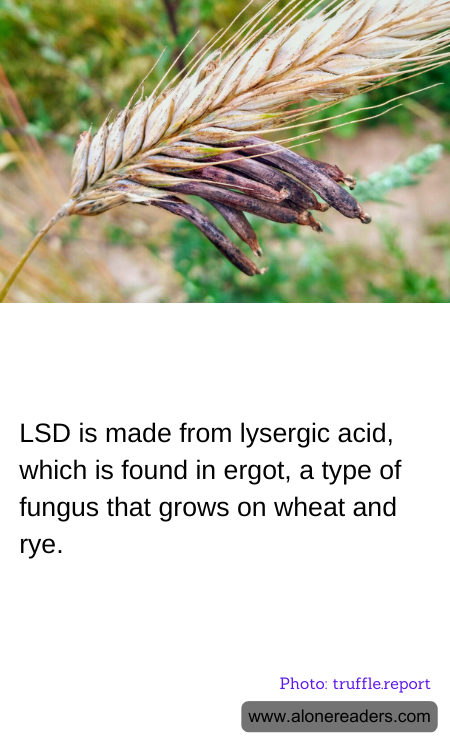
Lysergic acid diethylamide, commonly known as LSD, is a powerful hallucinogenic substance that has intrigued scientists, artists, and the general public for decades. Its origins are as fascinating as its effects, tracing back to a natural compound found in ergot, a type of fungus that grows on grains such as wheat and rye. This connection between a simple fungus and a potent psychedelic highlights the intricate relationships within nature and the unexpected paths through which scientific discoveries can emerge.
Ergot has a long and storied history, often associated with outbreaks of ergotism, a condition caused by consuming grains contaminated with the fungus. Symptoms of ergotism can range from hallucinations and convulsions to gangrene, due to the vasoconstrictive properties of some ergot alkaloids. Despite its dangerous potential, ergot has been used medicinally for centuries, particularly in midwifery to induce labor. It was within this context that Swiss chemist Albert Hofmann, working for the pharmaceutical company Sandoz, first synthesized LSD in 1938 while researching ergot derivatives for their therapeutic potential.
The synthesis of LSD involves the extraction of lysergic acid from ergot alkaloids. Lysergic acid itself is a complex molecule, and its transformation into LSD requires precise chemical reactions. Hofmann's initial synthesis did not immediately reveal the compound's psychoactive properties. It wasn't until 1943 that Hofmann accidentally ingested a small amount of LSD and experienced its profound effects, marking the beginning of a new era in psychopharmacology.
LSD quickly gained attention for its ability to induce altered states of consciousness, characterized by vivid visual hallucinations, altered perceptions of time and space, and deep introspective experiences. During the 1950s and 1960s, it was studied extensively for its potential therapeutic applications, particularly in psychiatry. Researchers explored its use in treating conditions such as alcoholism, anxiety, and depression, with some promising results. However, the widespread recreational use of LSD during the counterculture movement of the 1960s led to increased scrutiny and eventual legal restrictions.
Despite its controversial history, LSD remains a subject of scientific interest. Recent studies have revisited its potential therapeutic benefits, particularly in the context of mental health. Researchers are exploring its use in controlled settings to treat conditions like PTSD, anxiety, and depression, with some studies suggesting that LSD can facilitate profound personal insights and emotional breakthroughs.
The journey of LSD from a naturally occurring compound in a humble fungus to a substance of immense cultural and scientific significance underscores the complexity of nature and the potential for discovery within it. As research continues, the story of LSD serves as a reminder of the delicate balance between the benefits and risks of psychoactive substances, and the ongoing quest to understand the human mind.