More About This Card
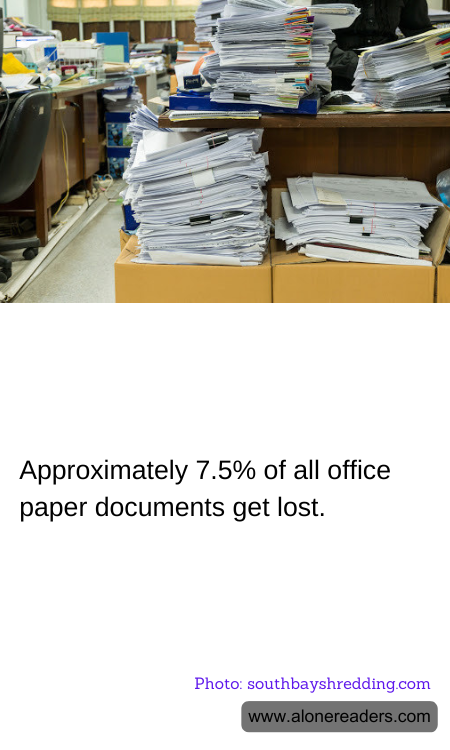
In the digital age, where technology is rapidly transforming the way we work, the reliance on paper documents remains surprisingly prevalent in many offices worldwide. However, this reliance comes with its own set of challenges, one of the most significant being the loss of documents. It is estimated that approximately 7.5% of all office paper documents get lost, a statistic that highlights a critical issue in document management and organizational efficiency.
The loss of paper documents can have far-reaching implications for businesses. For starters, it can lead to significant financial losses. When important documents go missing, companies may face delays in operations, incur costs in recreating lost documents, or even suffer legal repercussions if the documents are crucial for compliance purposes. Moreover, the time spent searching for lost documents can be substantial, diverting employees' attention from more productive tasks and ultimately affecting the overall efficiency of the organization.
Beyond the financial and operational impacts, the loss of paper documents can also affect a company's reputation. Clients and partners expect businesses to manage their information securely and efficiently. When documents are lost, it can erode trust and confidence, potentially damaging relationships and leading to lost business opportunities. In an era where data security and privacy are paramount, the inability to safeguard important documents can be seen as a significant shortcoming.
To mitigate the risk of losing paper documents, many organizations are turning to digital solutions. Document management systems (DMS) offer a way to store, organize, and retrieve documents electronically, reducing the reliance on physical paper and minimizing the risk of loss. These systems often come with features such as version control, access permissions, and audit trails, which enhance security and accountability. By digitizing documents, companies can also improve accessibility, allowing employees to access the information they need quickly and efficiently, regardless of their location.
Despite the clear advantages of digital document management, the transition from paper to digital can be challenging. It requires an initial investment in technology and training, as well as a cultural shift within the organization. Employees accustomed to handling paper documents may need time to adapt to new systems and processes. However, the long-term benefits of improved efficiency, reduced risk of document loss, and enhanced data security make the transition worthwhile.
In conclusion, the loss of approximately 7.5% of all office paper documents underscores the need for businesses to reassess their document management strategies. By embracing digital solutions, organizations can not only reduce the risk of losing important documents but also enhance their operational efficiency and safeguard their reputation. As the business landscape continues to evolve, those who adapt to these changes will be better positioned to thrive in an increasingly competitive environment.