More About This Card
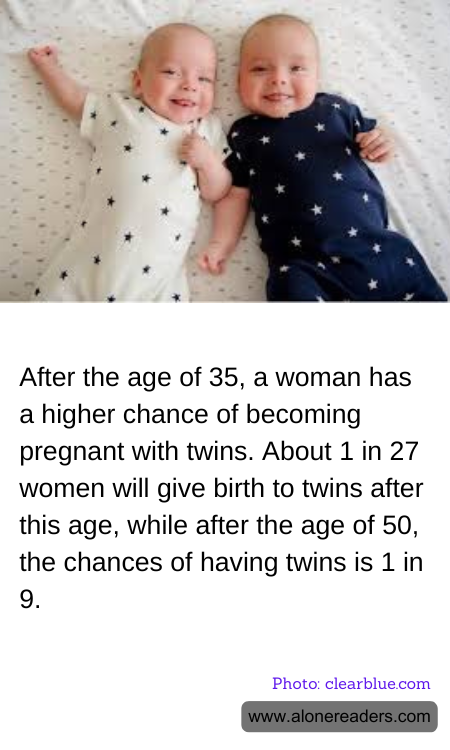
As women age, their reproductive systems undergo various changes, some of which can influence the likelihood of conceiving twins. Interestingly, the probability of having twins increases significantly after the age of 35. Statistics reveal that approximately 1 in 27 women will give birth to twins after reaching this age. This phenomenon can be attributed to several biological factors that come into play as women approach their late thirties and beyond.
One of the primary reasons for this increased likelihood is the hormonal changes that occur as women age. As women approach menopause, their bodies may release more than one egg during ovulation, a process known as hyperovulation. This increases the chances of both eggs being fertilized, leading to the conception of fraternal twins. Additionally, the use of fertility treatments, which are more commonly sought by older women, can also contribute to the higher incidence of twin births. These treatments often involve stimulating the ovaries to produce multiple eggs, further enhancing the probability of multiple births.
The trend becomes even more pronounced after the age of 50, where the chances of having twins rise dramatically to 1 in 9. This significant increase is largely due to the fact that women in this age group are more likely to use assisted reproductive technologies, such as in vitro fertilization (IVF). These technologies often involve the implantation of multiple embryos to increase the chances of a successful pregnancy, which can result in multiple births.
While the prospect of having twins can be exciting for many, it also comes with its own set of challenges and considerations. Twin pregnancies are often associated with higher risks, including preterm birth and low birth weight. Therefore, it is crucial for women who are pregnant with twins, especially those over the age of 35, to receive comprehensive prenatal care to monitor and manage any potential complications.
In conclusion, the likelihood of conceiving twins increases with age, particularly after 35 and even more so after 50. This is due to a combination of natural hormonal changes and the increased use of fertility treatments. While the possibility of having twins can be a joyful prospect, it is important for expectant mothers to be aware of the associated risks and to seek appropriate medical care to ensure the health and well-being of both themselves and their babies.