More About This Card
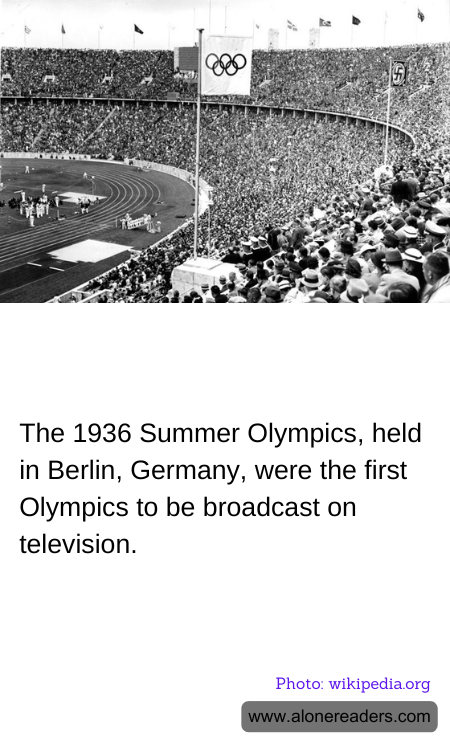
The 1936 Summer Olympics, officially known as the Games of the XI Olympiad, marked a significant milestone in the history of sports and broadcasting. Held in Berlin, Germany, these games were the first to be broadcast on television, ushering in a new era of how audiences could experience the thrill of international athletic competition. This groundbreaking development not only transformed the Olympics but also laid the foundation for the future of sports broadcasting.
The decision to host the Olympics in Berlin was made in 1931, before Adolf Hitler rose to power. By the time the games commenced, the Nazi regime saw the event as an opportunity to showcase Germany's resurgence on the world stage. Amidst this political backdrop, the technological advancements of the time were also on display. The German electronics company Telefunken, along with the state broadcaster Reichs-Rundfunk-Gesellschaft, played a pivotal role in bringing the Olympics to television screens. Although the broadcasts were limited to a few public viewing rooms in Berlin and Potsdam, it was a remarkable achievement that captivated audiences and demonstrated the potential of television as a medium.
The 1936 Olympics featured a wide array of sports, from athletics to gymnastics, and included over 4,000 athletes from 49 countries. Among the most memorable moments was the performance of American athlete Jesse Owens, who won four gold medals, challenging the Nazi ideology of racial superiority. These games were not only a showcase of athletic prowess but also a testament to the power of sports to transcend political and cultural barriers.
The television broadcasts of the 1936 Olympics were rudimentary by today's standards, with limited camera angles and black-and-white images. However, they represented a significant leap forward in how sports could be consumed by the public. The broadcasts allowed people who could not attend the games in person to experience the excitement and drama of the competitions, albeit in a limited capacity. This innovation paved the way for future developments in sports broadcasting, eventually leading to the global, multi-platform coverage we enjoy today.
The legacy of the 1936 Summer Olympics extends beyond the athletic achievements and the political context of the time. It marked the beginning of a new era in media, where television would become an integral part of how we experience and engage with sports. The success of these broadcasts demonstrated the potential of television to bring people together, offering a shared experience that transcends geographical boundaries. As we look back on these historic games, we can appreciate the foresight and innovation that set the stage for the modern sports broadcasting landscape.