More About This Card
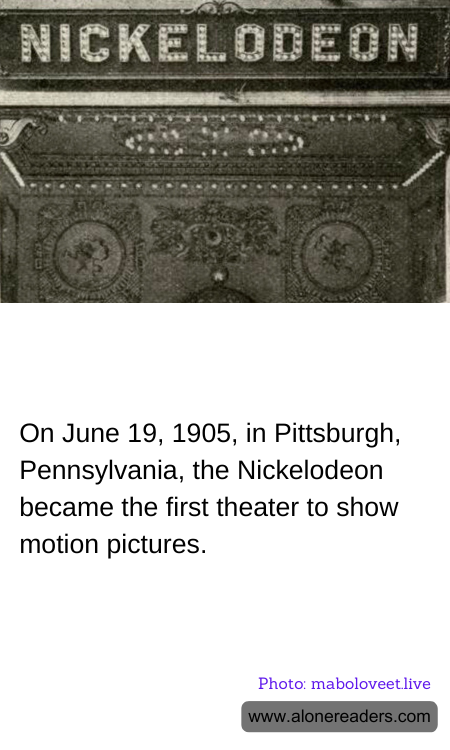
On June 19, 1905, a significant milestone in the history of entertainment unfolded in Pittsburgh, Pennsylvania. It was on this day that the Nickelodeon, the first theater dedicated exclusively to showing motion pictures, opened its doors to the public. This event marked the beginning of a new era in the world of entertainment, setting the stage for the global film industry that we know today.
The Nickelodeon was the brainchild of Harry Davis and John P. Harris, two enterprising businessmen who saw the potential of motion pictures as a form of mass entertainment. Located at 433-435 Smithfield Street, the theater was a modest venue, with a seating capacity of just 96. Despite its small size, the Nickelodeon quickly captured the imagination of the public. The name "Nickelodeon" itself was derived from the cost of admission—five cents, or a nickel—and the Greek word "odeion," meaning theater.
The concept of a theater dedicated solely to motion pictures was revolutionary at the time. Prior to the Nickelodeon, films were often shown as part of vaudeville acts or in traveling shows, where they were just one of many attractions. The Nickelodeon changed this by offering continuous screenings of short films throughout the day, allowing audiences to come and go as they pleased. This format proved immensely popular, drawing large crowds eager to experience the novelty of moving pictures.
The success of the Nickelodeon in Pittsburgh quickly inspired others to replicate the model, leading to the rapid proliferation of similar theaters across the United States. By 1910, there were thousands of nickelodeons in operation, each offering a unique blend of short films, newsreels, and serials. This widespread popularity helped to establish motion pictures as a dominant form of entertainment, paving the way for the development of the Hollywood film industry.
The impact of the Nickelodeon extended beyond the realm of entertainment. It played a crucial role in shaping the cultural landscape of the early 20th century, providing a shared experience for people from all walks of life. In an era before television and the internet, the Nickelodeon offered a glimpse into different worlds and stories, fostering a sense of community and connection among its audiences.
Today, the legacy of the Nickelodeon lives on in the countless movie theaters that continue to captivate audiences around the world. While the technology and scale of modern cinemas have evolved dramatically since 1905, the fundamental appeal of storytelling through motion pictures remains unchanged. The Nickelodeon's pioneering spirit serves as a reminder of the transformative power of innovation and the enduring allure of the silver screen.