More About This Card
Diamonds, often celebrated for their dazzling clarity and brilliance, are not always colorless. In fact, colored diamonds are among the most sought-after gemstones in the world, each hue telling a unique story of its formation. The captivating colors of these diamonds are primarily due to the presence of impurities and structural anomalies within the stone.
Boron and nitrogen are two elements that play a significant role in the coloration of diamonds. When boron atoms are present in a diamond's crystal lattice, they absorb light in such a way that the stone appears blue. This is the case with the famous Hope Diamond, whose deep blue color has fascinated gem enthusiasts for centuries. On the other hand, when nitrogen atoms are incorporated into the diamond's structure, they can cause the stone to appear yellow. The intensity of the yellow hue depends on the concentration and distribution of nitrogen within the diamond.
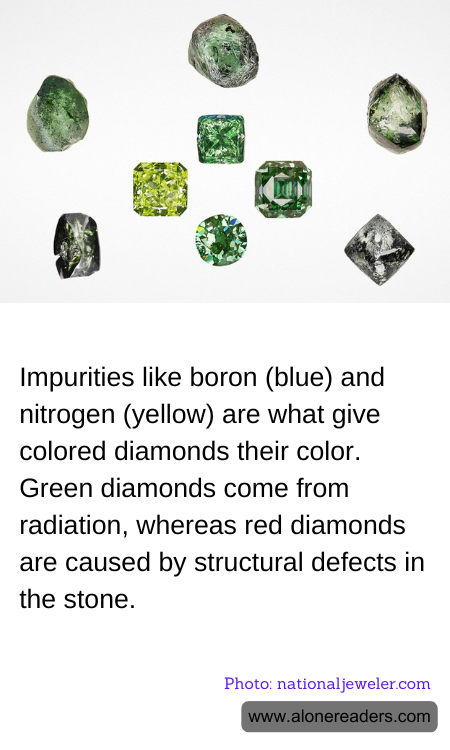
Green diamonds owe their verdant hue to a different phenomenon altogether. These diamonds are exposed to natural radiation over millions of years, which alters their crystal lattice. This exposure can occur when diamonds are in close proximity to radioactive minerals, such as uranium or thorium. The radiation causes the diamond to absorb red and yellow light, resulting in a green appearance. Unlike other colored diamonds, the green color is typically confined to the surface of the stone, making it a rare and intriguing find.
Red diamonds, perhaps the most mysterious of all, derive their color from structural defects rather than impurities. These defects, known as "plastic deformation," occur when the diamond is subjected to extreme pressure during its formation deep within the Earth. The distortion of the crystal lattice causes the diamond to absorb light differently, resulting in a red hue. Red diamonds are incredibly rare, with only a handful known to exist, making them some of the most valuable gemstones in the world.
The allure of colored diamonds lies not only in their beauty but also in the fascinating geological processes that give rise to their colors. Each colored diamond is a testament to the complex interplay of elements and conditions that occur deep within the Earth. Whether it's the presence of boron or nitrogen, the influence of radiation, or the impact of structural defects, these factors combine to create the stunning array of colors that make colored diamonds so enchanting.
For gemstone enthusiasts and collectors, understanding the origins of a diamond's color adds an extra layer of appreciation for these natural wonders. As science continues to unravel the mysteries of diamond formation, the allure of colored diamonds only grows, captivating the imaginations of people around the world.