More About This Card
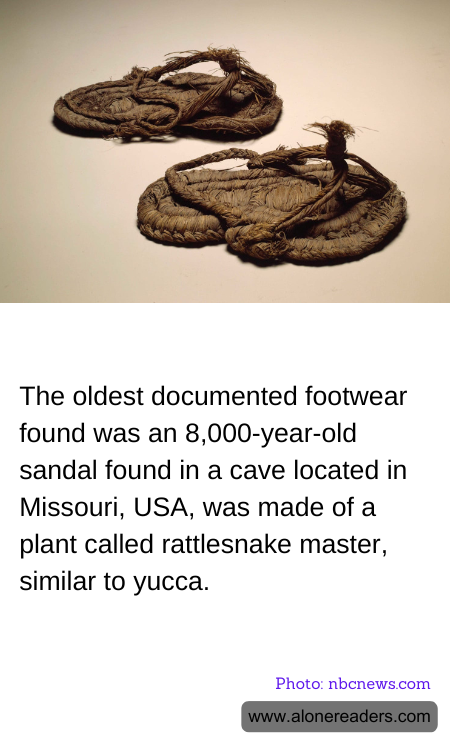
In the realm of archaeological discoveries, few artifacts capture the imagination quite like ancient footwear. Among the most fascinating finds is an 8,000-year-old sandal unearthed in a cave in Missouri, USA. This remarkable piece of history not only provides insight into the ingenuity of early humans but also offers a glimpse into the materials and techniques they employed to navigate their world.
The sandal, crafted from a plant known as rattlesnake master, is a testament to the resourcefulness of its creators. Rattlesnake master, a plant similar to yucca, was an ideal choice for footwear due to its durability and flexibility. The plant's fibrous leaves could be woven into a sturdy yet comfortable sandal, suitable for the varied terrain of prehistoric North America. This choice of material highlights the early humans' deep understanding of their environment and their ability to utilize available resources effectively.
The discovery of this ancient sandal was made in a cave, a location that likely served as a shelter and a storage site for the people who lived there. Caves provided a stable environment that helped preserve organic materials like plant fibers, which would otherwise have decomposed over time. The preservation of the sandal offers a rare opportunity to study the craftsmanship and daily life of early humans in the region.
This ancient footwear is not just a relic of the past; it is a bridge to understanding the cultural and technological advancements of early societies. The sandal's construction reveals a sophisticated knowledge of weaving techniques and an appreciation for functionality and comfort. It also suggests that the people who made and wore these sandals had developed a sense of style and personal expression, even in their utilitarian objects.
The discovery of the 8,000-year-old sandal in Missouri adds a significant chapter to the story of human innovation and adaptation. It underscores the importance of archaeological research in uncovering the mysteries of our ancestors and provides a tangible connection to the distant past. As we continue to explore and learn from such findings, we gain a deeper appreciation for the resilience and creativity of early humans, whose legacy continues to influence our understanding of human history.
In a world where fashion and technology constantly evolve, the ancient sandal serves as a reminder of the timeless human quest for comfort, practicality, and expression. It invites us to reflect on the journey of human development and the enduring impact of our ancestors' ingenuity. As we walk in their footsteps, quite literally, we are reminded of the shared heritage that binds us across millennia.