More About This Card
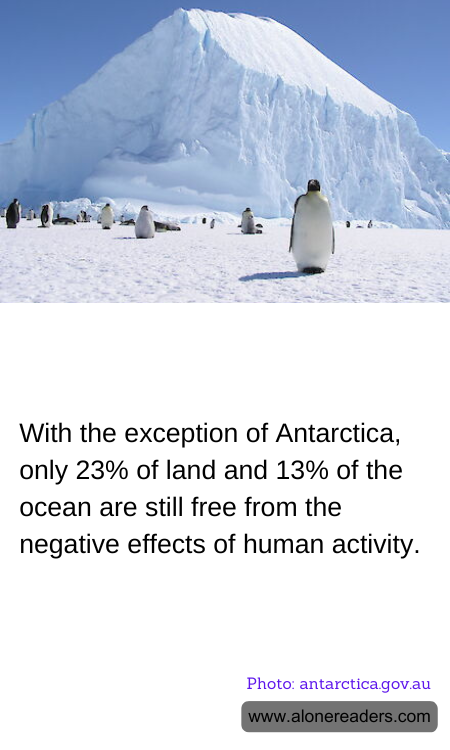
In the vast tapestry of our planet, the untouched and pristine areas are becoming increasingly rare. With the exception of Antarctica, only 23% of land and 13% of the ocean remain free from the negative effects of human activity. This stark reality underscores the profound impact humans have had on the Earth, reshaping landscapes, altering ecosystems, and leaving a significant footprint on the natural world.
Human activities, from urban development and agriculture to industrialization and deforestation, have transformed large swathes of land. Cities expand, forests are cleared for farmland, and infrastructure projects carve through once-untouched wilderness. These activities not only change the physical landscape but also disrupt the delicate balance of ecosystems, leading to habitat loss and a decline in biodiversity. The remaining 23% of land that has escaped significant human influence is often found in remote regions, such as dense rainforests, high mountain ranges, and arid deserts, where human access and development are limited.
The oceans, covering over 70% of the Earth's surface, are not immune to human impact. Only 13% of marine environments remain relatively untouched. Overfishing, pollution, and climate change have taken a toll on marine ecosystems. Coral reefs, often referred to as the "rainforests of the sea," are particularly vulnerable, with many experiencing bleaching events due to rising sea temperatures. Plastic pollution and oil spills further exacerbate the degradation of oceanic health, affecting marine life and the communities that depend on these resources.
The consequences of human activity extend beyond environmental degradation. The loss of natural habitats and biodiversity has far-reaching implications for the planet's health and our own well-being. Ecosystems provide essential services, such as clean air and water, pollination of crops, and climate regulation. As these systems are disrupted, the services they provide are diminished, posing challenges for food security, health, and resilience against natural disasters.
Efforts to mitigate these impacts are underway, with conservation initiatives and sustainable practices gaining momentum. Protected areas, such as national parks and marine reserves, play a crucial role in preserving biodiversity and maintaining ecological balance. Additionally, global agreements like the Paris Agreement aim to address climate change and promote sustainable development. However, the path to reversing the damage requires collective action and a commitment to rethinking our relationship with the natural world.
As we navigate the complexities of modern life, it is imperative to recognize the value of the remaining untouched areas and the need to protect them. By fostering a deeper understanding of our impact and embracing sustainable practices, we can work towards a future where both humanity and nature thrive. The challenge lies in balancing development with conservation, ensuring that the legacy we leave for future generations is one of stewardship and respect for the planet we call home.