More About This Card
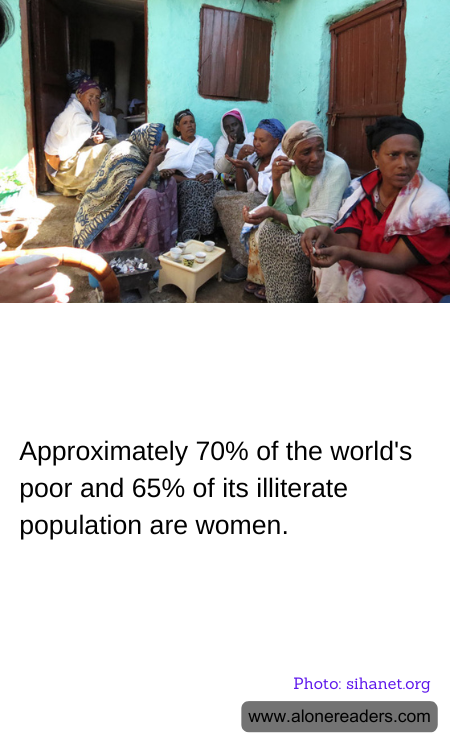
In today's world, the stark reality of gender inequality is reflected in the statistics that show approximately 70% of the world's poor and 65% of its illiterate population are women. These figures highlight a persistent global issue that affects millions of women and girls, limiting their opportunities and potential. Understanding the root causes and implications of these statistics is crucial in addressing the broader challenges of poverty and illiteracy.
The disproportionate number of women living in poverty is often a result of systemic barriers that restrict their access to resources, education, and employment opportunities. In many parts of the world, cultural norms and legal frameworks still favor men, leaving women with fewer rights and less control over their economic futures. Women are often relegated to lower-paying jobs and are more likely to work in informal sectors without job security or benefits. This economic disparity is compounded by the fact that women are frequently responsible for unpaid domestic labor, which limits their ability to pursue education or formal employment.
Education is a powerful tool for breaking the cycle of poverty, yet millions of women and girls are denied this basic right. The statistic that 65% of the world's illiterate population are women underscores the urgent need for educational reform and investment. Barriers to education for girls can include cultural attitudes that prioritize boys' education, early marriage, and a lack of safe and accessible schools. Without education, women are less able to advocate for themselves, participate in decision-making processes, or access better job opportunities, perpetuating a cycle of poverty and dependence.
Addressing these issues requires a multifaceted approach that includes policy changes, community engagement, and international cooperation. Governments and organizations must work together to create and enforce laws that promote gender equality and protect women's rights. This includes ensuring equal access to education, healthcare, and economic opportunities. Additionally, empowering women through education and skill development can have a ripple effect, improving not only their lives but also the well-being of their families and communities.
Community-based initiatives can also play a significant role in changing perceptions and breaking down barriers. By involving local leaders and stakeholders, programs can be tailored to address specific cultural and societal challenges. Encouraging men and boys to become allies in the fight for gender equality is also essential, as it fosters a more inclusive and supportive environment for women and girls.
Ultimately, reducing the number of women living in poverty and illiteracy is not just a matter of social justice; it is an economic imperative. When women are empowered and educated, they contribute to the economic growth and stability of their communities and nations. By investing in women and girls, we invest in a brighter, more equitable future for all.