More About This Card
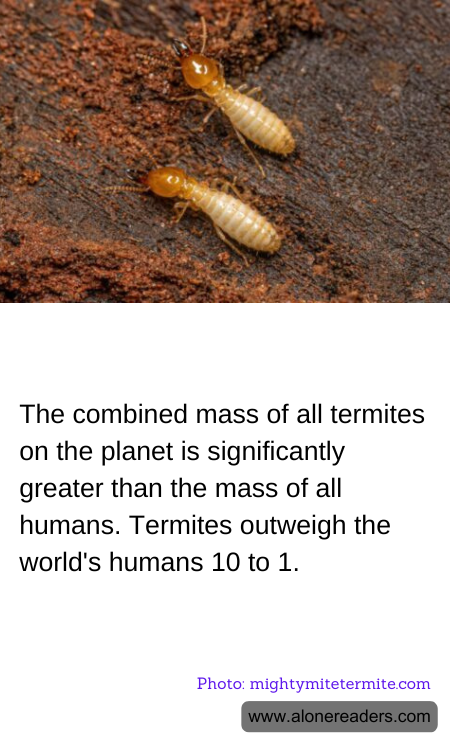
In the vast tapestry of life on Earth, humans often consider themselves the dominant species due to their intelligence, technological advancements, and ability to alter landscapes. However, when it comes to sheer biomass, humans are far from the top of the list. In fact, the combined mass of all termites on the planet significantly outweighs that of humans, with estimates suggesting that termites outweigh humans by a staggering ratio of 10 to 1.
Termites, often dismissed as mere pests, play a crucial role in the ecosystem. These small, social insects are found in almost every corner of the globe, thriving in diverse environments from tropical rainforests to arid deserts. Their success as a species is largely due to their ability to consume cellulose, a complex carbohydrate found in wood and plant matter. This ability not only allows them to break down dead plant material, recycling nutrients back into the ecosystem, but also contributes to their massive population numbers.
The sheer number of termites is mind-boggling. Estimates suggest that there are over 2,600 species of termites, with their total population reaching into the trillions. This vast number, combined with their relatively small size, results in a collective biomass that dwarfs that of humans. While the average human weighs around 62 kilograms, the average termite weighs less than a gram. However, their numbers are so immense that their total mass is estimated to be around 445 million tons, compared to the approximately 60 million tons of human biomass.
This comparison highlights the incredible diversity and adaptability of life on Earth. Termites have been around for over 250 million years, long before humans appeared on the scene. Their ability to thrive in various environments and their crucial role in nutrient cycling underscore their importance in maintaining ecological balance. Despite their small size, termites are a testament to the power of collective effort and specialization within the natural world.
For humans, this comparison serves as a humbling reminder of our place within the broader ecosystem. While we may have the ability to shape the environment to suit our needs, we are just one of many species that inhabit this planet. The fact that termites, often seen as insignificant, can collectively outweigh us by such a large margin is a powerful illustration of the interconnectedness of life and the importance of every species in maintaining the health of our planet.
In conclusion, the staggering biomass of termites compared to humans is a fascinating example of nature's complexity and resilience. It challenges us to appreciate the intricate web of life that sustains our world and to recognize the value of all creatures, no matter how small. As we continue to explore and understand the natural world, let us remember that every species, from the tiniest termite to the largest mammal, plays a vital role in the delicate balance of life on Earth.