More About This Card
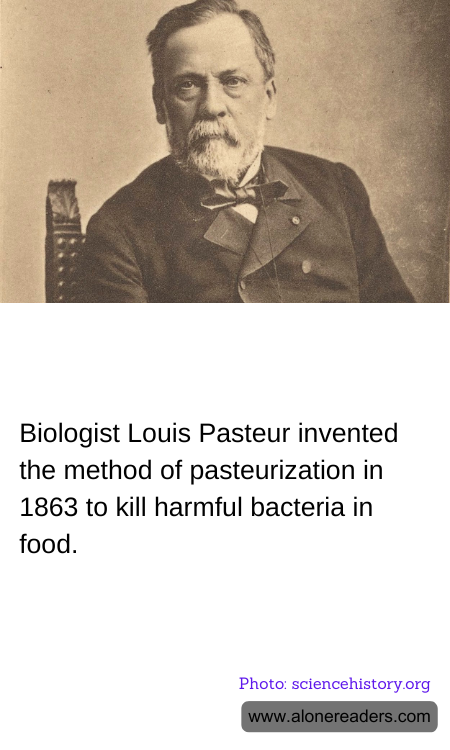
In the mid-19th century, a groundbreaking discovery by French biologist Louis Pasteur revolutionized the way we preserve food and beverages, ensuring their safety for consumption. In 1863, Pasteur invented the method of pasteurization, a process that would become a cornerstone in food safety and public health. This method involves heating liquids, such as milk and wine, to a specific temperature for a set period, effectively killing harmful bacteria and pathogens without compromising the nutritional value or taste of the product.
Pasteur's journey to this discovery began with his work on fermentation. He was tasked with investigating why certain batches of wine and beer were spoiling. Through meticulous experimentation, Pasteur identified that microorganisms were responsible for the fermentation process and that certain bacteria could cause spoilage. He hypothesized that heating the liquid could kill these unwanted bacteria, thereby preventing spoilage and extending the shelf life of the product. This insight laid the foundation for pasteurization, a process that would later be applied to a wide range of food products.
The impact of pasteurization on public health cannot be overstated. Before its widespread adoption, diseases such as tuberculosis, brucellosis, and typhoid fever were commonly transmitted through contaminated milk and other foods. Pasteurization significantly reduced the incidence of these diseases, contributing to a dramatic improvement in public health. By ensuring that food products were free from harmful bacteria, pasteurization helped to build consumer confidence in the safety of their food supply, a trust that continues to this day.
Pasteurization has evolved over the years, with various methods being developed to suit different types of food and beverages. The most common method, known as high-temperature short-time (HTST) pasteurization, involves heating the liquid to at least 161 degrees Fahrenheit (72 degrees Celsius) for 15 seconds. Another method, ultra-high temperature (UHT) pasteurization, heats the liquid to an even higher temperature for a shorter time, allowing products to be stored at room temperature for extended periods without spoiling.
Louis Pasteur's contribution to science and public health extends far beyond pasteurization. His work laid the groundwork for the field of microbiology and led to the development of vaccines for diseases such as rabies and anthrax. However, it is the process of pasteurization that remains one of his most enduring legacies, a testament to his innovative spirit and dedication to improving human health.
Today, pasteurization is a standard practice in the food industry, ensuring that the milk we pour into our cereal, the juice we drink with breakfast, and countless other products are safe for consumption. Louis Pasteur's invention continues to protect millions of people worldwide, underscoring the profound impact that scientific discovery can have on everyday life.