More About This Card
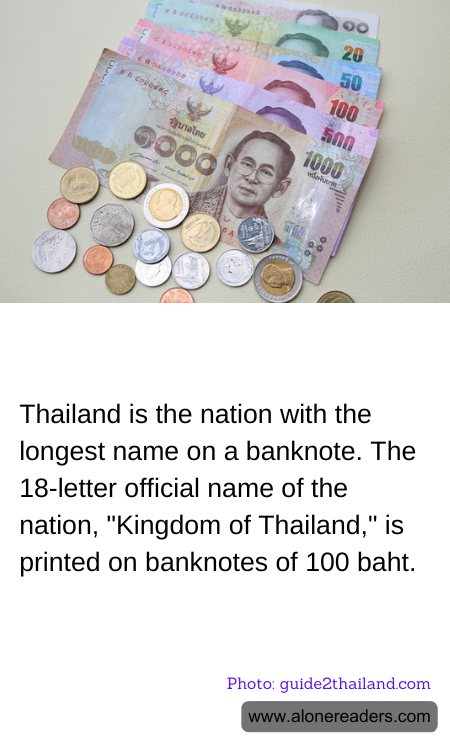
Thailand, a country renowned for its rich culture, stunning landscapes, and vibrant cities, holds a unique distinction in the world of currency. It is the nation with the longest name printed on a banknote. The official name, "Kingdom of Thailand," consists of 18 letters and is prominently displayed on the 100 baht note, making it a fascinating tidbit for numismatists and trivia enthusiasts alike.
The name "Kingdom of Thailand" reflects the country's deep-rooted history and its status as a constitutional monarchy. The term "Thailand" itself is derived from the word "Thai," which means "free," symbolizing the nation's pride in its independence and sovereignty. The inclusion of "Kingdom" underscores the country's royal heritage and the significant role the monarchy plays in Thai society. This blend of tradition and modernity is encapsulated in the currency that circulates throughout the nation.
Banknotes are more than just a medium of exchange; they are a canvas that tells the story of a nation's identity and values. In Thailand, the 100 baht note is not only a tool for transactions but also a piece of cultural heritage. The design of the banknote features intricate artwork and imagery that pay homage to Thailand's history, culture, and monarchy. The depiction of King Rama IX, a beloved figure in Thai history, alongside traditional Thai motifs, serves as a reminder of the country's rich past and its aspirations for the future.
The prominence of the name "Kingdom of Thailand" on the banknote is a testament to the importance of national identity in the country's currency design. It reflects the pride that the Thai people have in their nation and its unique place in the world. This attention to detail in currency design is not just about aesthetics; it is about preserving and promoting the cultural and historical narratives that define Thailand.
For visitors and collectors, Thai banknotes offer a glimpse into the country's soul. They are a tangible connection to the nation's history and a reminder of the values that continue to shape its present and future. The 100 baht note, with its 18-letter official name, stands as a symbol of Thailand's enduring legacy and its commitment to preserving its cultural heritage.
In a world where digital transactions are becoming increasingly common, the physical banknote remains a cherished artifact. It is a piece of art, a historical document, and a symbol of national pride. Thailand's distinction of having the longest name on a banknote is a small but significant part of its identity, reflecting the country's unique blend of tradition and modernity. As such, the 100 baht note is more than just currency; it is a celebration of Thailand's rich cultural tapestry and its enduring spirit of freedom and independence.