More About This Card
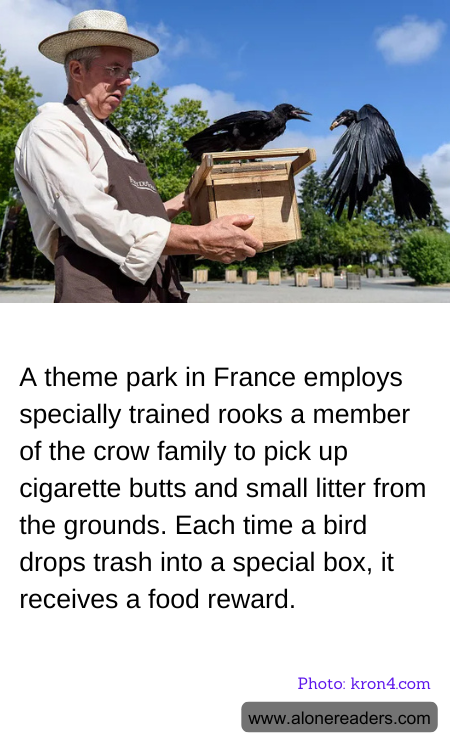
In a remarkable blend of nature and innovation, a theme park in France has taken an extraordinary step towards maintaining cleanliness and promoting environmental awareness. This unique initiative involves employing rooks, a member of the intelligent crow family, to pick up cigarette butts and small litter scattered across the park grounds. The rooks have been specially trained to collect trash and deposit it into designated boxes, where they are rewarded with food treats for their efforts. This initiative not only helps keep the park clean but also highlights the potential of using natural solutions to address human-made problems.
The idea of using birds for litter collection was conceived by the park's management as a creative and eco-friendly solution to the persistent issue of littering. Rooks, known for their intelligence and problem-solving abilities, were identified as ideal candidates for this task. The training process involved teaching the birds to associate picking up litter with receiving a food reward. This positive reinforcement method has proven effective, as the rooks quickly learned to seek out and collect small pieces of trash, such as cigarette butts, which are often difficult to clean up manually.
This initiative not only benefits the park by keeping it tidy but also serves as an educational tool for visitors. By witnessing the rooks in action, guests are encouraged to reflect on their own habits and the impact of littering on the environment. The presence of these industrious birds serves as a gentle reminder of the importance of disposing of waste responsibly and the role each individual plays in preserving the natural world.
Moreover, the project has sparked interest and admiration from environmentalists and animal behaviorists alike. It demonstrates an innovative approach to waste management that leverages the natural behaviors of animals to solve human challenges. The success of the program has prompted discussions about the potential for similar initiatives in other public spaces, where wildlife could be engaged in maintaining cleanliness and promoting sustainability.
The use of rooks in this capacity also underscores the broader theme of coexistence between humans and wildlife. It highlights the potential for harmonious interactions that benefit both parties, providing a model for future conservation efforts. As the world grapples with environmental challenges, such creative solutions offer hope and inspiration for a more sustainable future.
In conclusion, the employment of rooks to clean up litter at a French theme park is a testament to the power of innovation and collaboration between humans and nature. It serves as a reminder of the intelligence and adaptability of wildlife and the potential for creative solutions to environmental issues. This initiative not only keeps the park clean but also educates and inspires visitors, fostering a greater appreciation for the natural world and the importance of protecting it.