More About This Card
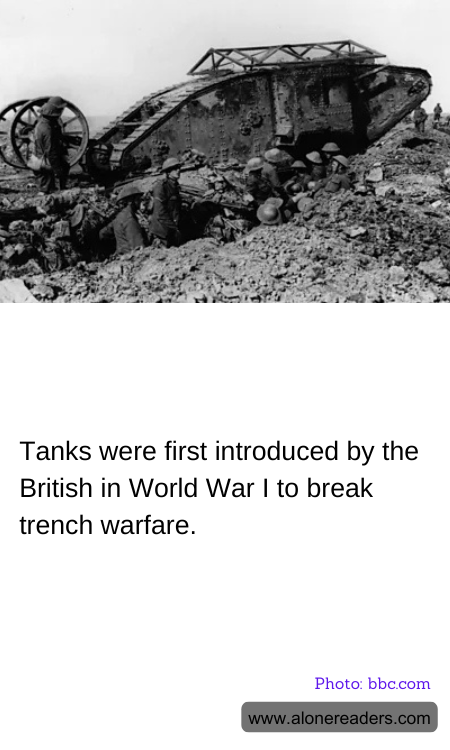
During the tumultuous years of World War I, the landscape of warfare underwent a dramatic transformation. One of the most significant innovations was the introduction of tanks by the British, a development that marked a pivotal shift in military strategy and technology. The advent of tanks was a direct response to the grueling stalemate of trench warfare, which had dominated the Western Front and resulted in devastating casualties with little territorial gain.
Trench warfare, characterized by its deep, fortified trenches and barbed wire defenses, created a nearly impenetrable barrier for advancing troops. The conditions were harsh, with soldiers facing constant threats from artillery bombardments, machine-gun fire, and the perils of no man's land. The need for a breakthrough was urgent, and it was within this context that the British sought to develop a new kind of weapon that could traverse the treacherous terrain and provide a decisive advantage.
The concept of the tank was born out of necessity and ingenuity. The British military, recognizing the limitations of traditional infantry assaults, began experimenting with armored vehicles that could withstand enemy fire and crush barbed wire defenses. The first prototype, known as "Little Willie," was developed in 1915, but it was the subsequent model, "Big Willie" or "Mother," that laid the groundwork for the tanks used in combat.
The first significant deployment of tanks occurred during the Battle of the Somme in September 1916. Although their initial impact was limited due to mechanical failures and the challenging terrain, the potential of these armored behemoths was undeniable. The tanks' ability to cross trenches, resist small arms fire, and support infantry advances offered a glimpse of their future role in warfare.
As the war progressed, tank technology and tactics evolved rapidly. By the time of the Battle of Cambrai in November 1917, tanks were used in greater numbers and with more strategic coordination. This battle demonstrated the tanks' potential to achieve surprise and mobility, leading to a temporary breakthrough in the German lines. The success at Cambrai underscored the importance of tanks in modern warfare and paved the way for their continued development and deployment.
The introduction of tanks by the British during World War I was a groundbreaking moment in military history. It signaled the end of static trench warfare and heralded a new era of mechanized combat. While the early tanks were far from perfect, their impact on the battlefield was profound, setting the stage for future innovations in armored warfare. The legacy of these early tanks is evident in the modern military vehicles that continue to play a crucial role in conflicts around the world today.