More About This Card
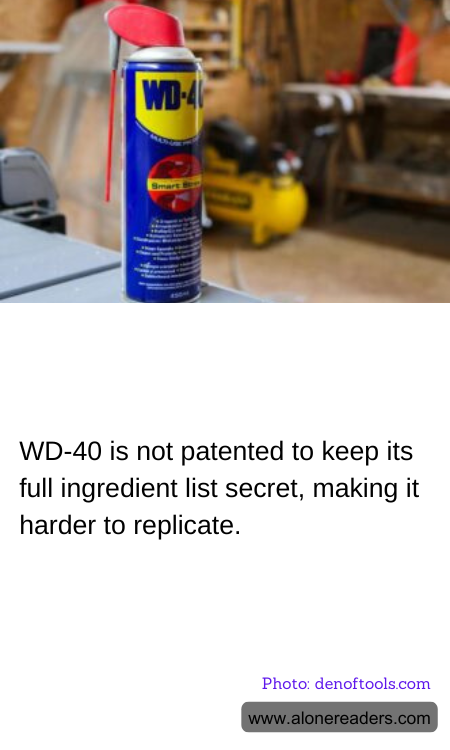
WD-40, the ubiquitous multi-use product found in countless homes and workshops, has long been a staple for those seeking a quick fix for squeaky hinges, rusted bolts, and sticky mechanisms. Despite its widespread use and popularity, the formula of WD-40 remains shrouded in mystery, largely due to the company's strategic decision not to patent the product. This choice has kept the full ingredient list a closely guarded secret, making it significantly more challenging for competitors to replicate.
The origins of WD-40 date back to 1953 when it was developed by the Rocket Chemical Company, now known as the WD-40 Company, in San Diego, California. The product's name stands for "Water Displacement, 40th formula," indicating that it was the 40th attempt to create a formula that effectively displaced water. The success of this formula was so profound that it quickly became a staple in both industrial and household settings.
By choosing not to patent WD-40, the company has cleverly circumvented the requirement to disclose its ingredients, which is a standard part of the patent process. Patents typically provide protection for a limited time, after which the details become public, allowing others to produce similar products. Instead, WD-40 has relied on trade secret laws to protect its formula indefinitely. This approach ensures that the exact composition remains confidential, preserving its uniqueness and competitive edge in the market.
The decision to keep the formula secret has proven to be a savvy business move. It has allowed WD-40 to maintain its status as a market leader without the threat of direct imitation. While many have attempted to create similar products, none have been able to perfectly replicate the effectiveness and versatility of WD-40. This mystique surrounding the product has only added to its allure, making it a trusted brand for generations.
For consumers, the lack of a patent means that the exact ingredients of WD-40 remain unknown, which can be both intriguing and concerning. While the product is generally considered safe for its intended uses, the secrecy does leave some questions unanswered regarding its environmental impact and potential health effects. However, the company assures users that WD-40 is safe when used as directed, and it continues to be a go-to solution for a myriad of household and industrial problems.
In an age where transparency is often demanded, WD-40's ability to maintain its secret formula is a testament to the company's commitment to protecting its intellectual property. This decision has not only preserved the product's market dominance but has also contributed to its legendary status. As long as the formula remains a secret, WD-40 will continue to be a fascinating example of how trade secrets can be as powerful as patents in the world of business.