More About This Card
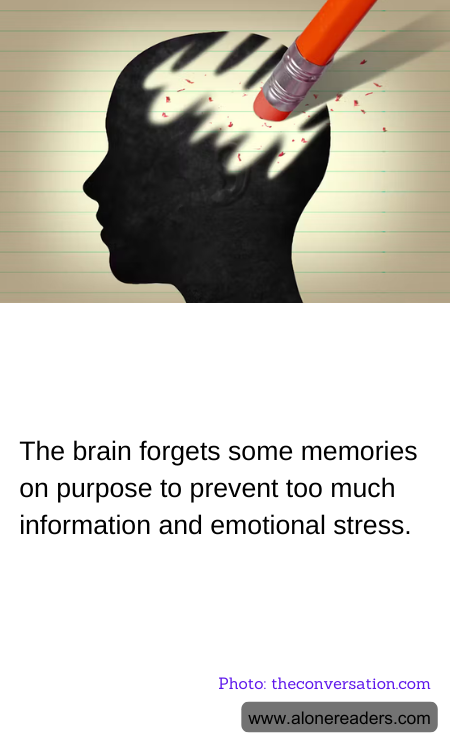
The human brain is a marvel of nature, a complex organ that processes vast amounts of information every second. Yet, despite its incredible capacity, the brain does not retain every piece of information it encounters. This selective memory process is not a flaw but a sophisticated mechanism designed to maintain cognitive efficiency and emotional well-being.
The brain's ability to forget is as crucial as its ability to remember. Imagine a world where every detail, every face, every word spoken was permanently etched into our minds. Such a scenario would lead to an overwhelming flood of information, making it difficult to focus on the present or plan for the future. By forgetting certain memories, the brain prioritizes essential information, allowing us to function effectively in our daily lives.
This selective forgetting is not random but a purposeful act of the brain to manage cognitive load. The brain filters out unnecessary details, focusing instead on information that is relevant and useful. This process is akin to a computer's need to clear cache to ensure smooth operation. By discarding trivial or redundant data, the brain conserves energy and resources, optimizing its performance.
Moreover, forgetting plays a vital role in emotional regulation. Memories are not just factual records; they are often intertwined with emotions. Holding onto every emotional experience, especially negative ones, can lead to chronic stress and anxiety. The brain, therefore, employs forgetting as a coping mechanism to protect us from emotional overload. By letting go of painful or distressing memories, the brain helps us heal and move forward, fostering resilience and emotional stability.
Scientific research supports this notion, suggesting that the brain's hippocampus and prefrontal cortex are actively involved in the process of forgetting. These regions work together to suppress unwanted memories, ensuring that our mental space is reserved for more pertinent and positive experiences. This adaptive function of forgetting is crucial for mental health, allowing individuals to focus on growth and learning rather than being bogged down by past traumas.
In essence, the brain's ability to forget is a testament to its intricate design and adaptability. It is a protective mechanism that balances the need to remember with the necessity to forget, ensuring that we are not overwhelmed by the sheer volume of information and emotions we encounter. By understanding and appreciating this aspect of our cognitive function, we can better navigate the complexities of life, embracing the present while letting go of the past.