More About This Card
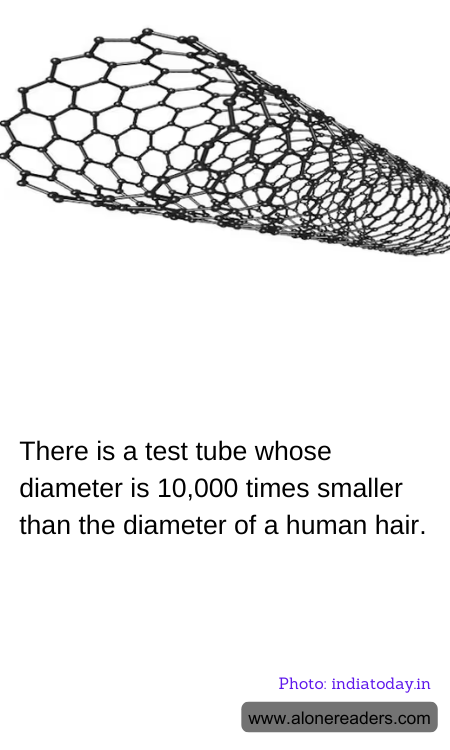
In the ever-evolving world of science and technology, the development of tools and devices at the nanoscale has opened up a realm of possibilities that were once the stuff of science fiction. Among these groundbreaking innovations is the creation of a test tube whose diameter is 10,000 times smaller than that of a human hair. This remarkable feat of engineering not only highlights the incredible advancements in nanotechnology but also promises to revolutionize various fields, from medicine to materials science.
To put this into perspective, the average diameter of a human hair is about 70 micrometers. A test tube with a diameter 10,000 times smaller would measure approximately 7 nanometers. This is an astonishingly small scale, considering that a nanometer is one-billionth of a meter. At this size, the test tube is invisible to the naked eye and requires sophisticated equipment, such as electron microscopes, to be observed and manipulated.
The implications of such a tiny test tube are vast and varied. In the field of medicine, for instance, these nanoscale test tubes could be used to deliver drugs directly to specific cells or tissues, minimizing side effects and increasing the efficacy of treatments. This targeted approach could be particularly beneficial in the treatment of cancer, where precision is crucial in destroying malignant cells while sparing healthy ones. Additionally, these test tubes could be used to study biological processes at the molecular level, providing insights into the mechanisms of diseases and leading to the development of new therapies.
Beyond medicine, nanoscale test tubes have the potential to impact materials science significantly. They could be used to create new materials with unique properties, such as increased strength, flexibility, or conductivity. This could lead to the development of more efficient electronic devices, stronger construction materials, and even new forms of energy storage. The ability to manipulate materials at such a small scale opens up endless possibilities for innovation and improvement in various industries.
The creation of a test tube with a diameter 10,000 times smaller than a human hair is a testament to the ingenuity and creativity of scientists and engineers. It serves as a reminder of the incredible potential of nanotechnology and its ability to transform our world. As research and development in this field continue to progress, we can expect to see even more remarkable advancements that will shape the future of science, technology, and medicine. The nanoscale test tube is just one example of how the smallest innovations can have the most significant impact, paving the way for a future where the impossible becomes possible.