More About This Card
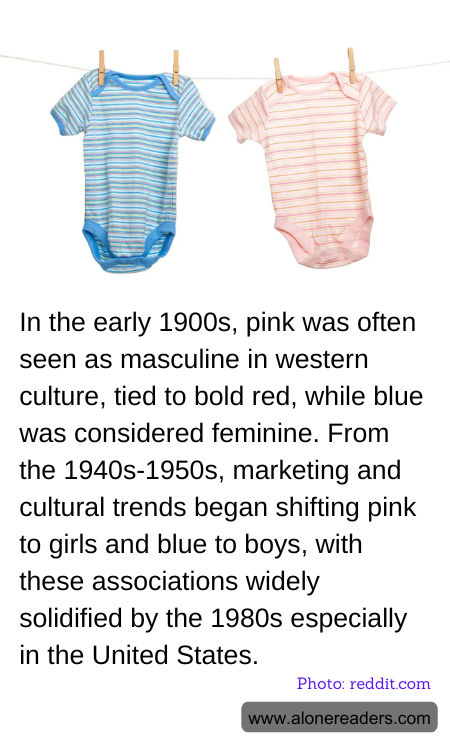
In the early 1900s, the color pink was often associated with masculinity in Western culture. This might seem surprising today, but at the time, pink was considered a strong and bold color, closely related to red, which was seen as a symbol of strength and power. Blue, on the other hand, was viewed as delicate and dainty, making it more suitable for girls. This perception was reflected in fashion and societal norms, where pink was recommended for boys and blue for girls.
The shift in color associations began to take shape around the 1940s and 1950s, influenced by marketing strategies and evolving cultural trends. Retailers and manufacturers started to promote pink for girls and blue for boys, a move that was partly driven by the desire to differentiate products and boost sales. This marketing strategy was further reinforced by the rise of consumer culture, where gender-specific products became more prevalent. As a result, parents began to dress their children in colors that aligned with these new norms, gradually embedding these associations into the cultural fabric.
By the 1980s, the pink-for-girls and blue-for-boys paradigm had become deeply entrenched, especially in the United States. This was a period marked by a heightened awareness of gender roles and identity, which was reflected in the way colors were marketed and perceived. The media played a significant role in solidifying these associations, with television shows, movies, and advertisements often depicting girls in pink and boys in blue. This widespread portrayal further cemented the color-gender link in the public consciousness.
The transformation of pink and blue into gender-specific colors is a fascinating example of how cultural perceptions can evolve over time. It highlights the power of marketing and societal influences in shaping our understanding of gender and identity. While these color associations remain prevalent today, there is a growing movement towards breaking down these traditional norms, encouraging a more inclusive approach to color and gender. This shift reflects a broader trend towards embracing diversity and challenging stereotypes, paving the way for a future where colors are seen as expressions of individuality rather than rigid gender markers.