More About This Card
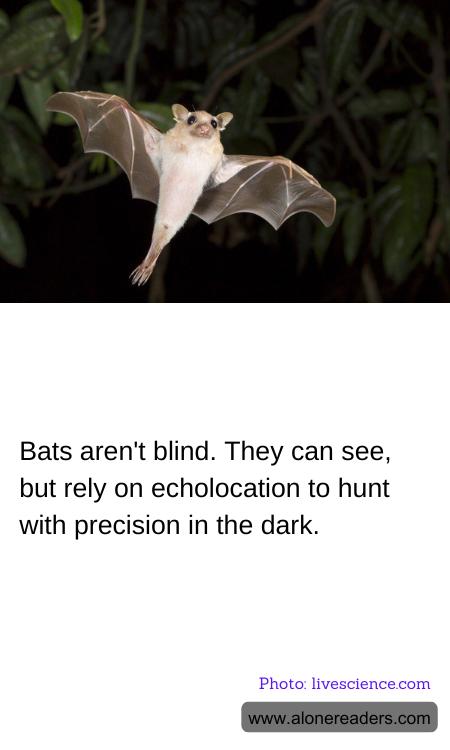
Bats have long been misunderstood creatures, often shrouded in myths and misconceptions. One of the most persistent myths is that bats are blind. This couldn't be further from the truth. In reality, bats can see quite well, but they have evolved to rely on a sophisticated system known as echolocation to navigate and hunt with remarkable precision in the dark.
Echolocation is a biological sonar used by several kinds of animals, but bats are perhaps the most famous practitioners. This system allows them to emit high-frequency sounds that bounce off objects in their environment. By listening to the echoes that return, bats can construct a detailed auditory map of their surroundings. This ability is particularly useful at night when visibility is low, allowing bats to detect obstacles, locate prey, and avoid predators with incredible accuracy.
Despite their reliance on echolocation, bats do not have poor eyesight. In fact, many species of bats have excellent vision, particularly in low-light conditions. Their eyes are adapted to see in the dark, which complements their echolocation abilities. This dual sensory system makes bats highly effective nocturnal hunters. While their eyes help them detect larger objects and navigate over longer distances, echolocation provides the fine detail needed to capture small, fast-moving insects.
The myth of bats being blind likely stems from their nocturnal habits and the fact that they often fly erratically, which can appear chaotic to human observers. However, this erratic flight is a result of their agile hunting techniques rather than poor vision. Bats are capable of making rapid, precise maneuvers to catch their prey, which often includes insects that are also active at night.
Understanding the truth about bats' vision and echolocation not only dispels myths but also highlights the incredible adaptations these creatures have developed to thrive in their environments. Bats play a crucial role in ecosystems around the world, acting as natural pest controllers by consuming vast quantities of insects. They also contribute to pollination and seed dispersal, making them vital to the health of many ecosystems.
In conclusion, bats are far from blind. They possess a unique combination of visual and auditory skills that allow them to navigate and hunt with precision in the dark. By appreciating the true nature of these fascinating creatures, we can better understand their importance and the need to protect their habitats. As we continue to learn more about bats, it becomes increasingly clear that they are not the eerie, blind creatures of legend, but rather, remarkable animals with extraordinary abilities.