More About This Card
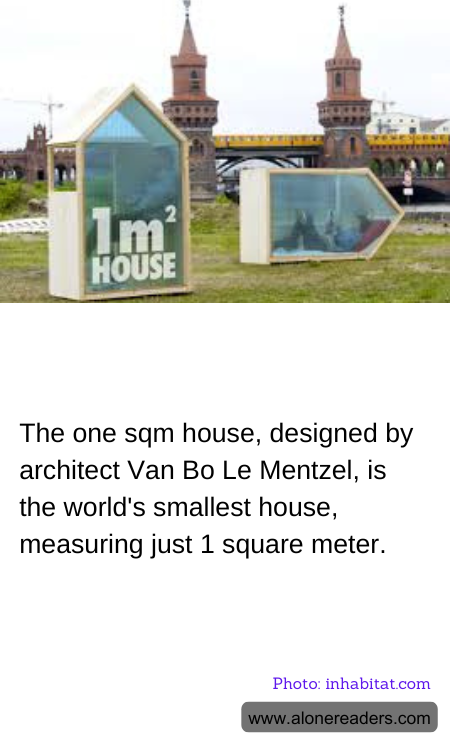
In the world of architecture, where grandiose designs and sprawling structures often steal the spotlight, a unique creation by architect Van Bo Le Mentzel has captured the imagination of many. The one square meter house, as its name suggests, is the world's smallest house, measuring just one square meter. This tiny dwelling challenges conventional notions of what a home can be, offering a fresh perspective on minimalism and sustainable living.
Van Bo Le Mentzel, a Berlin-based architect, designed this micro-house as part of a broader movement to rethink how we use space. The concept is simple yet profound: a house that is small enough to be transported easily, yet functional enough to serve as a personal retreat. The one square meter house is constructed from lightweight materials, making it portable and easy to assemble. Its design includes a door, a window, and a small bench that can be converted into a bed, providing the basic necessities for a temporary shelter.
The idea behind this tiny house is not just about creating a compact living space; it is also about promoting a lifestyle that values simplicity and sustainability. In a world where urbanization and population growth are leading to increased demand for housing, the one square meter house offers a solution that is both innovative and environmentally friendly. By reducing the amount of space and resources needed for a home, this design encourages people to think critically about their consumption habits and the impact they have on the planet.
Moreover, the one square meter house serves as a powerful statement on the concept of home ownership. In many parts of the world, owning a home is a significant financial burden, often requiring years of savings and debt. This tiny house challenges the notion that a home must be a substantial investment, suggesting instead that a home can be something simple and affordable. It invites people to consider what is truly necessary for comfort and happiness, and to prioritize experiences and relationships over material possessions.
While the one square meter house may not be a practical solution for everyone, it has sparked important conversations about the future of housing and urban living. It encourages architects, city planners, and individuals to explore new ways of thinking about space and community. As cities continue to grow and resources become scarcer, innovative designs like this one will play a crucial role in shaping sustainable and inclusive urban environments.
In conclusion, the one square meter house by Van Bo Le Mentzel is more than just a novelty; it is a symbol of a movement towards minimalism, sustainability, and reimagined living spaces. It challenges us to reconsider our relationship with our homes and the environment, offering a vision of a future where less is truly more.