More About This Card
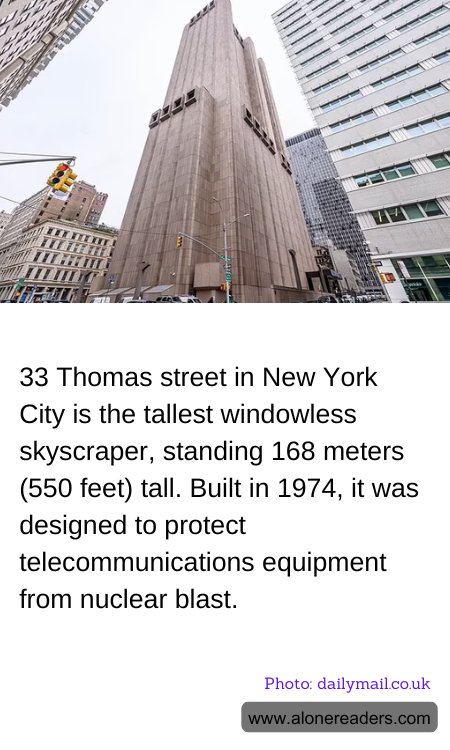
In the bustling skyline of New York City, where architectural marvels compete for attention, 33 Thomas Street stands out not for its aesthetic appeal but for its intriguing design and purpose. Rising to a height of 168 meters (550 feet), this windowless skyscraper is a testament to an era when the Cold War's shadow loomed large over technological infrastructure. Built in 1974, the building was designed with a singular mission: to protect vital telecommunications equipment from the catastrophic effects of a nuclear blast.
The building's stark, monolithic appearance is a departure from the glass and steel elegance that characterizes much of Manhattan's skyline. Its windowless façade, constructed from concrete, is not just a stylistic choice but a functional one. The absence of windows is intended to shield the sensitive equipment housed within from electromagnetic pulses that could be generated by a nuclear explosion. This design reflects a period in history when the threat of nuclear conflict was a significant concern, and safeguarding communication lines was a priority.
33 Thomas Street, often referred to as the AT&T Long Lines Building, was originally constructed to house telephone switching equipment. At the time, telecommunications were the backbone of global connectivity, and ensuring their resilience was paramount. The building's robust design includes features such as thick concrete walls and a self-sufficient infrastructure capable of sustaining operations independently for up to two weeks. This includes its own power supply, water, and food storage, making it a fortress of communication in the heart of New York City.
Over the years, the building has been shrouded in mystery and speculation. Its imposing presence and lack of windows have fueled numerous conspiracy theories, with some suggesting it serves as a hub for clandestine government operations. While much of its current use remains undisclosed, it is known that the building continues to play a crucial role in telecommunications, albeit in a world that has evolved significantly since its construction.
Despite its utilitarian design, 33 Thomas Street is a fascinating piece of architectural history. It stands as a reminder of a time when the world was on edge, and the need to protect communication infrastructure was of utmost importance. Today, as technology continues to advance and the nature of threats evolves, the building remains a symbol of resilience and foresight. For those who walk the streets of New York City, it is a silent sentinel, watching over the city and its ever-changing landscape.