More About This Card
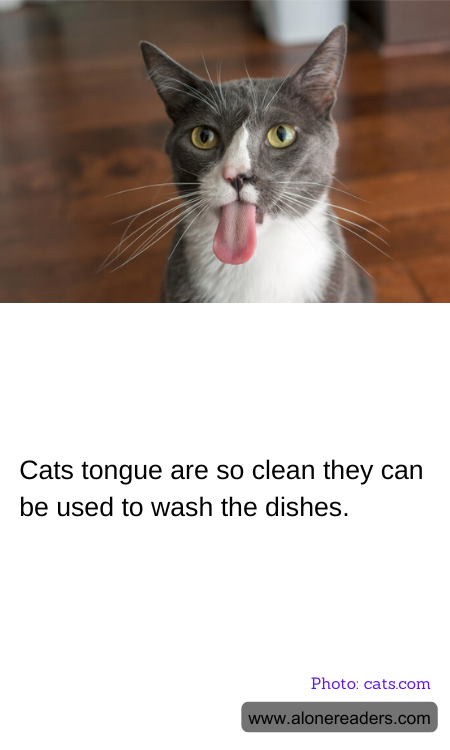
Cats are fascinating creatures, known for their agility, independence, and unique grooming habits. One of the most intriguing aspects of a cat's anatomy is its tongue. Covered in tiny, hook-like structures called papillae, a cat's tongue is not only an efficient grooming tool but also a marvel of nature's design. However, the notion that a cat's tongue is so clean it could be used to wash dishes is more myth than reality, albeit an interesting one to explore.
The papillae on a cat's tongue are made of keratin, the same material found in human fingernails. These backward-facing hooks are perfect for removing loose fur and dirt from a cat's coat, making their grooming process incredibly effective. This self-cleaning mechanism is why cats are often perceived as being exceptionally clean animals. Their tongues can remove debris and distribute natural oils across their fur, contributing to their sleek and shiny appearance. However, while this grooming process is efficient for maintaining a cat's hygiene, it doesn't necessarily translate to the cleanliness required for washing dishes.
The idea that a cat's tongue could be used to wash dishes likely stems from a misunderstanding of how cleanliness is defined in different contexts. While a cat's tongue is adept at cleaning fur, it is not equipped to handle the bacteria and food residues found on dishes. In fact, a cat's mouth, like any other animal's, contains a variety of bacteria that are part of its natural oral flora. These bacteria are harmless to the cat but could pose a risk if transferred to human-used items like dishes.
Moreover, the concept of cleanliness in dishwashing involves not only the removal of visible debris but also the elimination of germs and bacteria to ensure food safety. This is typically achieved through the use of detergents and hot water, which are far beyond the capabilities of a cat's tongue. While the papillae might be able to scrape off some food particles, they cannot sanitize surfaces to the standards required for human consumption.
In conclusion, while a cat's tongue is a remarkable tool for personal grooming, it is not suitable for washing dishes. The cleanliness achieved by a cat's grooming habits is specific to their needs and does not equate to the hygiene standards necessary for dishwashing. This myth, though amusing, highlights the importance of understanding the specific functions and limitations of animal anatomy. Cats will continue to be admired for their self-sufficiency and cleanliness, but when it comes to washing dishes, it's best to stick with traditional methods.