More About This Card
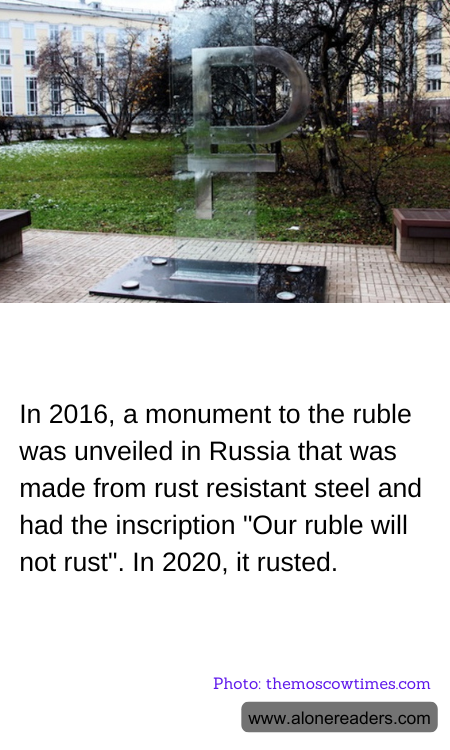
In 2016, a monument dedicated to the Russian ruble was unveiled in the city of Yelabuga, Tatarstan, with much fanfare and national pride. Crafted from rust-resistant steel, the monument was intended to symbolize the enduring strength and resilience of the Russian currency. The inscription boldly declared, "Our ruble will not rust," a statement meant to inspire confidence in the ruble's stability amidst fluctuating global economic conditions. However, just four years later, in 2020, the monument began to show signs of rust, sparking a wave of irony and reflection on the symbolic nature of such public displays.
The monument's deterioration became a metaphor for the challenges faced by the Russian economy and its currency over the years. Despite the initial optimism, the ruble has experienced significant volatility, influenced by various factors such as international sanctions, fluctuating oil prices, and broader geopolitical tensions. The rusting of the monument, therefore, seemed to mirror the economic uncertainties and the inherent unpredictability of financial markets.
For many, the rusting monument served as a poignant reminder of the gap that can exist between symbolic gestures and reality. While the intention behind the monument was to project strength and durability, the physical corrosion highlighted the complexities and vulnerabilities that can affect even the most robust-seeming entities. It underscored the idea that symbols, no matter how well-intentioned, cannot always withstand the test of time without proper maintenance and adaptation to changing circumstances.
The incident also sparked discussions about the nature of national pride and the ways in which countries choose to represent their economic achievements. While monuments and symbols play a crucial role in fostering national identity and unity, they must be backed by tangible actions and policies that address underlying economic challenges. The rusting ruble monument became a call to action for policymakers and citizens alike to focus on sustainable economic strategies that ensure long-term stability and growth.
In the end, the rusting of the ruble monument serves as a valuable lesson in humility and the importance of aligning symbolic representations with reality. It reminds us that while symbols can inspire and unite, they must be supported by genuine efforts to address the complexities of the real world. As Russia continues to navigate its economic path, the monument stands as a testament to the ongoing journey toward achieving a resilient and prosperous future.