More About This Card
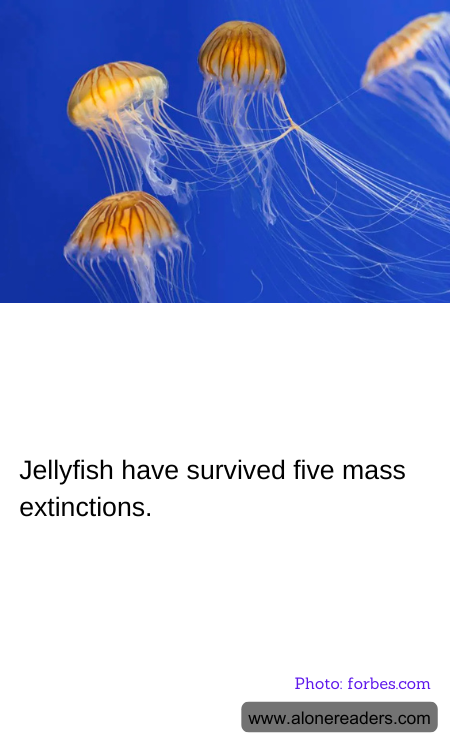
Jellyfish, with their ethereal beauty and seemingly simple structure, are among the most fascinating creatures in the ocean. These gelatinous beings have been drifting through the world's oceans for over 500 million years, a testament to their resilience and adaptability. Remarkably, jellyfish have survived five mass extinction events, periods in Earth's history when a significant percentage of all life forms were wiped out. Their survival offers a glimpse into the mysteries of evolution and the tenacity of life.
The first mass extinction, known as the Ordovician-Silurian extinction, occurred around 444 million years ago. It was a time when most life was still confined to the oceans, and jellyfish were already well-established inhabitants. Despite the dramatic changes in climate and sea levels that led to the extinction of many marine species, jellyfish managed to endure. Their simple body structure, lacking complex organs, may have contributed to their resilience, allowing them to adapt to varying environmental conditions.
The Devonian extinction, which happened approximately 375 million years ago, was another hurdle that jellyfish overcame. This event saw the demise of many marine species, particularly those that were more complex and specialized. Jellyfish, with their basic anatomy and versatile feeding habits, were able to thrive in the altered ecosystems. Their ability to reproduce quickly and in large numbers likely played a crucial role in their survival, ensuring that they could repopulate and adapt to new ecological niches.
The Permian-Triassic extinction, often referred to as "The Great Dying," was the most severe extinction event, occurring around 252 million years ago. It wiped out an estimated 96% of marine species. Yet, jellyfish persisted, floating through the tumultuous seas. Their adaptability to different water temperatures and salinities may have been key factors in their continued existence. Unlike many other marine organisms, jellyfish do not rely on specific habitats or food sources, which gives them a significant advantage in times of ecological upheaval.
During the Triassic-Jurassic extinction, approximately 201 million years ago, jellyfish once again demonstrated their resilience. This event paved the way for the rise of dinosaurs, but jellyfish continued to thrive in the oceans. Their ability to survive in low-oxygen environments, a condition that proved fatal for many other marine creatures, likely contributed to their endurance.
The most recent mass extinction, the Cretaceous-Paleogene event, occurred 66 million years ago and famously led to the extinction of the dinosaurs. Jellyfish, however, emerged unscathed. Their survival through this period is a testament to their evolutionary success. Unlike many species that require specific environmental conditions, jellyfish can adapt to a wide range of habitats, from the deep sea to coastal waters.
Today, jellyfish continue to inhabit the world's oceans, a living link to Earth's distant past. Their survival through five mass extinctions highlights the incredible adaptability of life and the enduring mysteries of evolution. As we face modern environmental challenges, jellyfish remind us of the resilience of nature and the importance of understanding and preserving the delicate balance of our ecosystems.