More About This Card
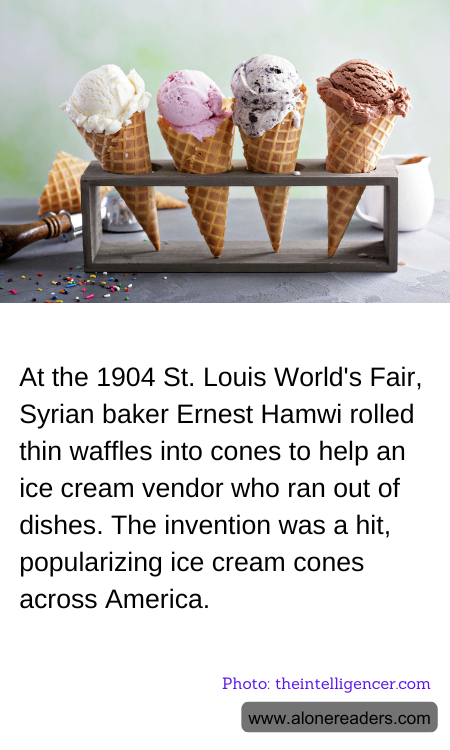
In the bustling atmosphere of the 1904 St. Louis World's Fair, an unexpected culinary innovation took place that would forever change the way people enjoyed ice cream. Amid the vibrant displays and international exhibits, a Syrian baker named Ernest Hamwi found himself at the center of a serendipitous moment that would lead to the creation of the beloved ice cream cone.
The fair was a grand event, showcasing the latest in technology, culture, and cuisine from around the world. Among the many vendors was an ice cream seller who faced an unforeseen dilemma: he had run out of dishes to serve his popular frozen treat. As crowds continued to gather, eager for a taste of the refreshing dessert, the vendor was in desperate need of a solution.
Nearby, Ernest Hamwi was selling a traditional Middle Eastern pastry known as zalabia, a thin, crisp waffle-like confection. Observing the ice cream vendor's predicament, Hamwi had a stroke of genius. He quickly rolled one of his zalabia into a cone shape, creating a makeshift vessel for the ice cream. This simple yet ingenious idea allowed the vendor to continue serving his customers, and the novelty of eating ice cream from a cone quickly caught on.
The invention was an instant hit, captivating fairgoers with its practicality and charm. The ice cream cone offered a convenient and portable way to enjoy the treat, eliminating the need for dishes and utensils. It was a perfect solution for the bustling environment of the fair, where visitors were eager to explore and sample the various attractions without being encumbered by cumbersome tableware.
As the fair continued, the popularity of the ice cream cone spread like wildfire. Vendors began to adopt the idea, and soon, the cone became a staple at ice cream stands across the fairgrounds. The concept was so well-received that it quickly transcended the boundaries of the fair, making its way into ice cream parlors and street vendors across America.
The success of the ice cream cone at the St. Louis World's Fair marked the beginning of a new era for the frozen dessert industry. It transformed the way people consumed ice cream, turning it into a more accessible and enjoyable experience. The cone's appeal lay not only in its practicality but also in the delightful combination of textures and flavors it offered, with the crispness of the waffle complementing the creamy sweetness of the ice cream.
Today, the ice cream cone is a beloved symbol of summertime joy and indulgence, enjoyed by people of all ages around the world. Ernest Hamwi's innovative spirit and quick thinking at the 1904 World's Fair left an indelible mark on culinary history, proving that sometimes the simplest ideas can have the most profound impact.