More About This Card
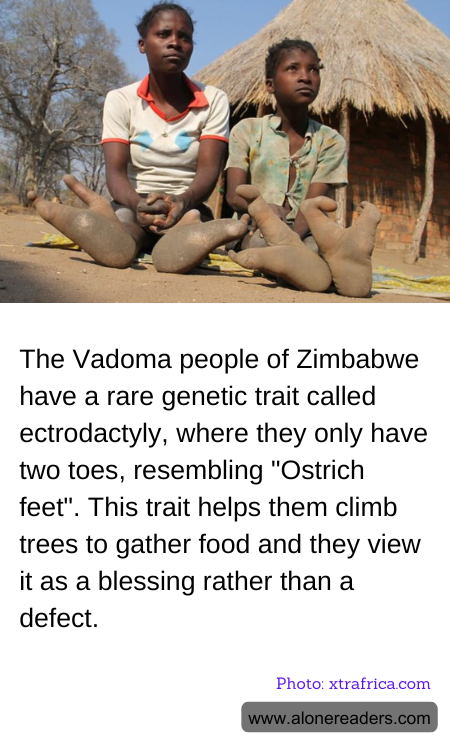
In the heart of Zimbabwe, nestled within the expansive landscape of the Zambezi Valley, resides a unique community known as the Vadoma people. This indigenous group is distinguished not only by their rich cultural heritage but also by a rare genetic trait that has fascinated geneticists and anthropologists alike. Known as ectrodactyly, this condition results in the absence of some toes, leaving the Vadoma with only two toes on each foot. This distinctive feature has earned them the nickname "Ostrich-footed tribe," as their feet bear a striking resemblance to those of an ostrich.
Ectrodactyly is a genetic condition that is passed down through generations within the Vadoma community. Unlike many societies that might view such a condition as a disability, the Vadoma people embrace it as a unique blessing. This perspective is deeply rooted in their cultural beliefs and lifestyle. The Vadoma have adapted to their environment in ways that make this trait advantageous. Living in a region where climbing trees is essential for gathering food, their two-toed feet provide a natural grip that aids in scaling the trunks of trees to reach fruits and other resources that are vital to their sustenance.
The Vadoma's acceptance and celebration of ectrodactyly highlight a broader understanding of diversity and adaptation. In a world where physical differences are often met with stigma, the Vadoma people offer a refreshing perspective on how communities can thrive by embracing their unique characteristics. This acceptance is not just a matter of necessity but is woven into the fabric of their identity, influencing how they interact with their environment and each other.
Moreover, the Vadoma's story is a testament to the incredible adaptability of human beings. It challenges conventional notions of what is considered a "defect" and encourages a reevaluation of how we perceive physical differences. By viewing ectrodactyly as a blessing, the Vadoma people remind us that diversity is not just something to be tolerated but celebrated. Their ability to turn what might be seen as a limitation into an advantage is a powerful example of resilience and ingenuity.
In a rapidly changing world, the Vadoma people stand as a symbol of how traditional knowledge and unique genetic traits can coexist harmoniously. Their story is not just about a rare genetic condition but about the broader human capacity to adapt and thrive in diverse environments. As we continue to explore the complexities of human genetics and cultural diversity, the Vadoma people offer valuable insights into the beauty of human variation and the strength found in embracing one's unique identity.