More About This Card
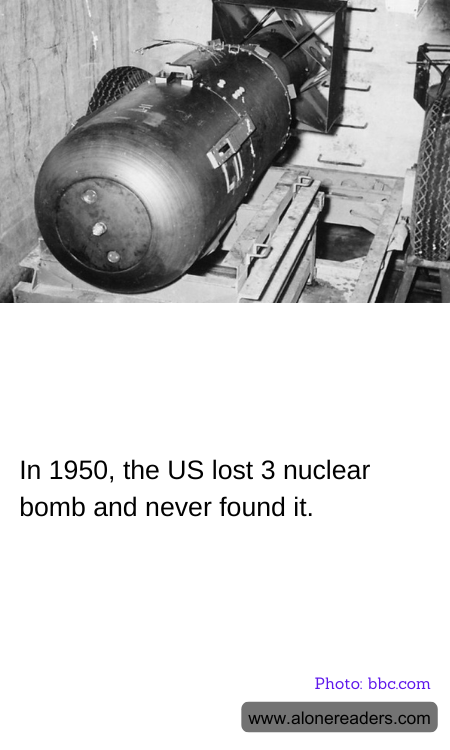
In the annals of military history, few stories are as intriguing and unsettling as the tale of the United States' lost nuclear bombs. In 1950, during the early years of the Cold War, the U.S. military experienced a series of incidents that led to the loss of three nuclear bombs, which have never been recovered. These events, shrouded in secrecy and mystery, continue to capture the imagination and concern of people worldwide.
The first incident occurred on February 13, 1950, when a B-36 bomber was on a training mission from Alaska to Texas. The aircraft, carrying a Mark 4 nuclear bomb, encountered severe mechanical issues. To ensure the safety of the crew, the decision was made to jettison the bomb over the Pacific Ocean before the crew bailed out. The bomb, which was not armed with a plutonium core, was dropped into the ocean and never recovered. Although it did not pose a nuclear threat, the loss marked a significant moment in military history, highlighting the potential dangers of handling nuclear weapons.
Later that year, on November 10, another incident unfolded involving a B-50 bomber. The aircraft was flying over Canada when it experienced engine trouble. To lighten the load and prevent a crash, the crew jettisoned a nuclear bomb into the St. Lawrence River. Like the previous incident, the bomb was not armed with its nuclear core, but its loss underscored the precarious nature of nuclear weaponry during that era. Despite extensive search efforts, the bomb was never found, leaving its fate a mystery.
The third and perhaps most concerning incident took place on March 10, 1956, when a B-47 bomber disappeared over the Mediterranean Sea. The aircraft was carrying two nuclear capsules, which were part of the bomb's core. Despite a massive search operation, neither the plane nor the capsules were ever located. This incident raised alarms about the potential for nuclear materials to fall into the wrong hands, a fear that persists to this day.
These lost bombs, often referred to as "Broken Arrows," reflect the challenges and risks associated with the early days of nuclear weaponry. While none of the lost bombs were armed with their nuclear cores, the incidents highlight the potential for catastrophic accidents. They also serve as a reminder of the importance of stringent safety protocols and the need for transparency in military operations involving nuclear materials.
The mystery of the lost bombs continues to intrigue historians, researchers, and the public. Despite advancements in technology and search capabilities, the exact locations of these bombs remain unknown. The stories of these lost nuclear weapons serve as a sobering reminder of the complexities and dangers inherent in the nuclear age, emphasizing the need for vigilance and responsibility in handling such powerful and potentially destructive technology.