More About This Card
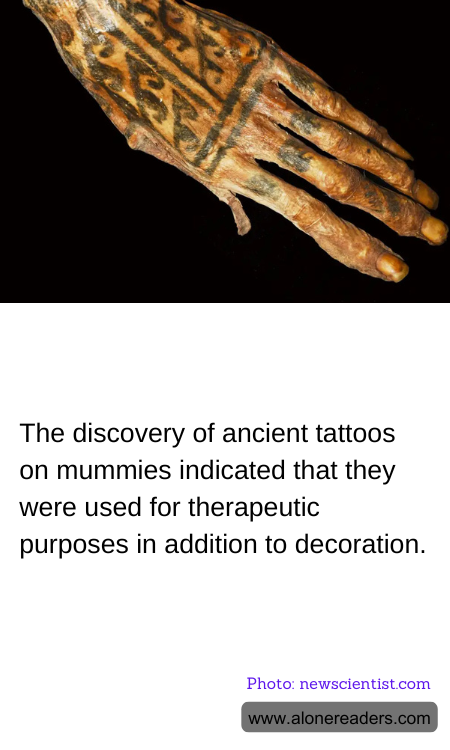
The discovery of ancient tattoos on mummies has opened a fascinating window into the past, revealing that these body markings were not merely decorative but also served therapeutic purposes. This revelation has emerged from the meticulous study of mummified remains, which have preserved these intricate designs for thousands of years. As researchers delve deeper into the history of tattoos, they are uncovering a complex tapestry of cultural practices that highlight the multifaceted roles these markings played in ancient societies.
Tattoos have been found on mummies from various cultures around the world, including those from ancient Egypt, the Andes, and the Arctic. The most famous of these is perhaps Ötzi the Iceman, a naturally mummified individual from the Copper Age, discovered in the Alps. Ötzi's body bears a series of tattoos that align with acupuncture points, suggesting they may have been used to alleviate physical ailments. This aligns with the theory that tattoos were applied not just for adornment but as a form of early medical treatment, akin to acupuncture or acupressure.
In ancient Egypt, tattoos have been found on female mummies, with patterns that suggest a link to fertility and childbirth. These tattoos were often placed on the abdomen, thighs, and breasts, areas associated with reproduction. Some scholars propose that these tattoos served as amulets, providing protection and strength during pregnancy and labor. The presence of tattoos on priestesses and other women of high status further indicates their significance beyond mere decoration, possibly serving as symbols of religious or social status.
The therapeutic use of tattoos is not limited to physical health but extends to spiritual well-being. In many ancient cultures, tattoos were believed to possess magical properties, warding off evil spirits or bringing good fortune. This spiritual dimension adds another layer to our understanding of why ancient peoples chose to endure the pain of tattooing. The act of tattooing itself may have been a ritualistic process, imbued with meaning and significance that transcended the physical markings.
Modern technology, such as infrared imaging and advanced microscopy, has allowed researchers to study these ancient tattoos in unprecedented detail. By analyzing the pigments and techniques used, scientists can gain insights into the materials and methods employed by ancient tattoo artists. This not only enhances our understanding of ancient medical practices but also sheds light on the cultural exchanges between different civilizations, as tattooing techniques and styles were shared and adapted across regions.
The discovery of ancient tattoos on mummies underscores the complexity of human history and the diverse ways in which people have sought to heal and express themselves. These findings challenge the modern perception of tattoos as purely aesthetic and highlight their historical significance as tools for healing and protection. As research continues, the stories etched into the skin of these ancient individuals will undoubtedly continue to captivate and inform us, offering a deeper appreciation for the rich tapestry of human culture and innovation.