More About This Card
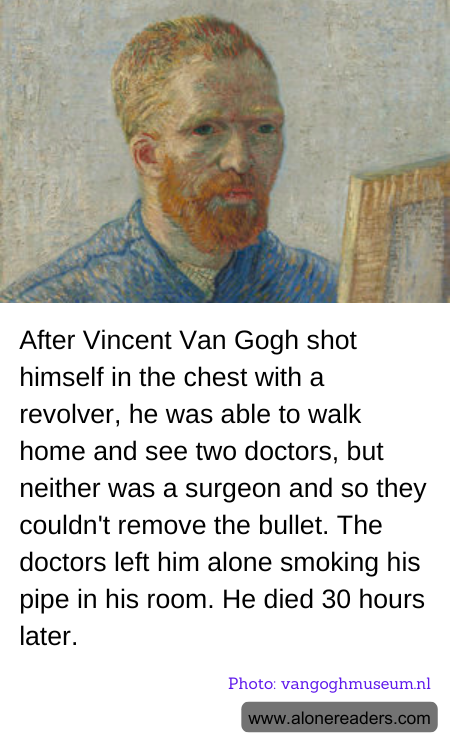
Vincent Van Gogh, one of the most celebrated artists in history, lived a life marked by both extraordinary creativity and profound personal struggles. On July 27, 1890, in a tragic turn of events, Van Gogh shot himself in the chest with a revolver while in the wheat fields of Auvers-sur-Oise, France. Despite the severity of his injury, Van Gogh managed to walk back to the inn where he was staying, a testament to his resilience and determination.
Upon his return, Van Gogh was attended to by two local doctors. However, neither of them was a surgeon, and they were unable to remove the bullet lodged in his chest. The limitations of medical practice at the time meant that Van Gogh's condition was precarious. Despite their inability to perform the necessary surgery, the doctors did what they could to make him comfortable. They left him in his room, where he was found calmly smoking his pipe, a poignant image of a man facing the end of his life with a semblance of peace.
The following 30 hours were a period of reflection and perhaps reconciliation for Van Gogh. During this time, he was visited by his brother Theo, who had been a constant source of support throughout his tumultuous life. Their bond was deep, and Theo's presence provided some solace in Van Gogh's final hours. The artist's death on July 29, 1890, marked the end of a life filled with both brilliance and suffering.
Van Gogh's passing was a significant loss to the art world, but his legacy endures through his prolific body of work, which includes masterpieces such as "Starry Night" and "Sunflowers." His unique style and emotional depth have inspired countless artists and continue to captivate audiences worldwide. Despite the tragic circumstances of his death, Van Gogh's life and art remain a testament to the enduring power of creativity and the human spirit.
His story serves as a reminder of the struggles faced by many artists and the importance of mental health awareness. Today, Van Gogh is celebrated not only for his artistic genius but also for his resilience in the face of adversity. His life and work continue to inspire discussions about the intersection of creativity and mental health, encouraging a more compassionate understanding of those who, like Van Gogh, grapple with inner turmoil.