More About This Card
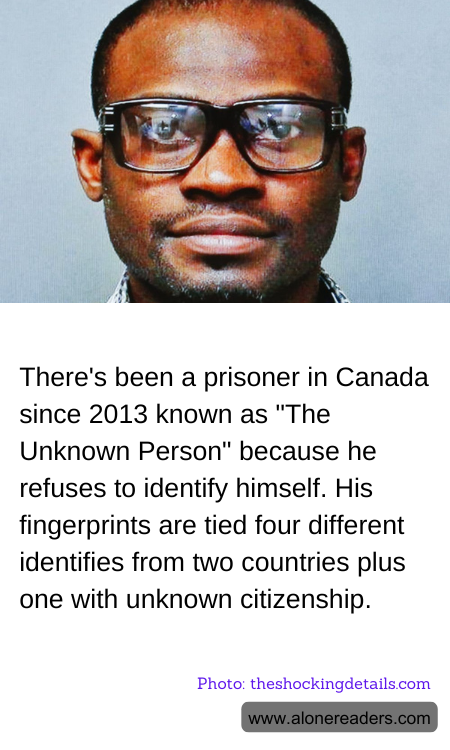
In the annals of Canadian legal history, few cases have captured the public's imagination quite like that of the enigmatic figure known only as "The Unknown Person." Since 2013, this individual has been held in custody, steadfastly refusing to reveal his true identity. His case is a perplexing puzzle that has baffled authorities and intrigued the public, raising questions about identity, privacy, and the limits of the legal system.
The mystery deepens with the revelation that his fingerprints are linked to four different identities spanning two countries, with one of these identities belonging to a person of unknown citizenship. This tangled web of aliases and nationalities has made it nearly impossible for Canadian authorities to ascertain who he truly is, or even where he originally hails from. The situation is further complicated by the fact that none of the identities linked to his fingerprints have been conclusively verified, leaving investigators at a frustrating impasse.
Despite numerous attempts to coax information from him, "The Unknown Person" remains resolutely silent, refusing to divulge any personal details. His silence has sparked a myriad of theories and speculations. Some suggest he might be a fugitive from justice, while others propose he could be a victim of human trafficking or a person with severe amnesia. Yet, without any concrete evidence, these remain mere conjectures.
The case of "The Unknown Person" raises significant legal and ethical questions. How long can someone be detained without a confirmed identity? What rights does an unidentified person have under Canadian law? These are questions that challenge the very foundations of the justice system, pushing the boundaries of legal norms and human rights.
Moreover, this case highlights the complexities of modern identity verification in an increasingly globalized world. With the advent of advanced technology, one might assume that identifying an individual would be straightforward. However, "The Unknown Person" serves as a stark reminder of the limitations and challenges that still exist in the realm of identity verification and international cooperation.
As the years pass, the mystery of "The Unknown Person" continues to captivate and confound. His story is a testament to the enduring human spirit and the complexities of identity in the modern age. Whether he will ever choose to reveal his true self remains uncertain, but his case will undoubtedly continue to be a topic of intrigue and debate for years to come.