More About This Card
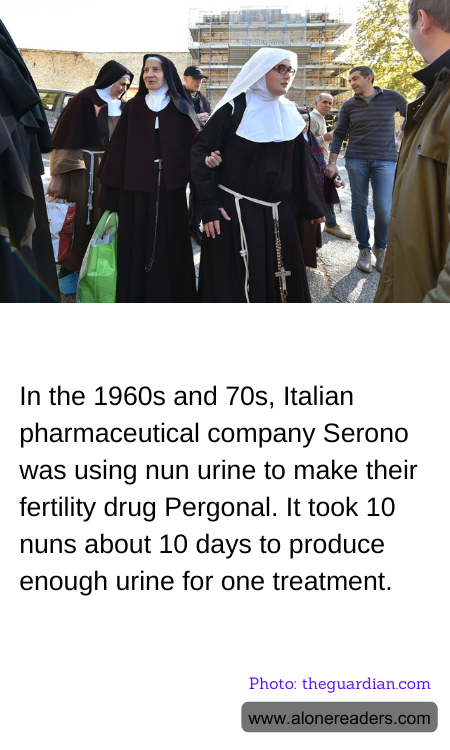
In the mid-20th century, the world of medicine was undergoing rapid advancements, and the field of fertility treatments was no exception. Among the pioneers in this area was the Italian pharmaceutical company Serono, which developed a groundbreaking fertility drug known as Pergonal. What set Pergonal apart was its unique and somewhat unconventional source: the urine of nuns.
During the 1960s and 70s, Serono discovered that the urine of postmenopausal women contained high levels of gonadotropins, hormones that are crucial in stimulating the ovaries and aiding fertility. These hormones, particularly follicle-stimulating hormone (FSH) and luteinizing hormone (LH), are essential for women undergoing fertility treatments. The challenge, however, was obtaining these hormones in sufficient quantities to produce an effective drug.
To address this, Serono turned to an unusual yet practical solution. They enlisted the help of convents, where postmenopausal nuns could provide a steady supply of urine. It took approximately 10 nuns about 10 days to produce enough urine to extract the necessary hormones for just one treatment of Pergonal. This process, while labor-intensive, was a testament to the innovative approaches taken during that era to meet medical needs.
The use of nun urine in the production of Pergonal highlights the lengths to which scientists and pharmaceutical companies went to harness natural resources for medical advancements. It also underscores the collaborative efforts between religious institutions and the scientific community, working together towards a common goal of helping women achieve pregnancy.
Pergonal became a significant breakthrough in fertility treatments, offering hope to countless couples struggling with infertility. It paved the way for the development of more advanced fertility drugs and treatments that are widely used today. The story of Pergonal serves as a reminder of the creative and sometimes surprising methods employed in the pursuit of medical progress.
While modern biotechnology has since replaced the need for such unconventional sources, the legacy of Pergonal and its unique origins remain a fascinating chapter in the history of medicine. It is a testament to human ingenuity and the relentless pursuit of solutions to complex medical challenges, reflecting a time when innovation knew no bounds.