More About This Card
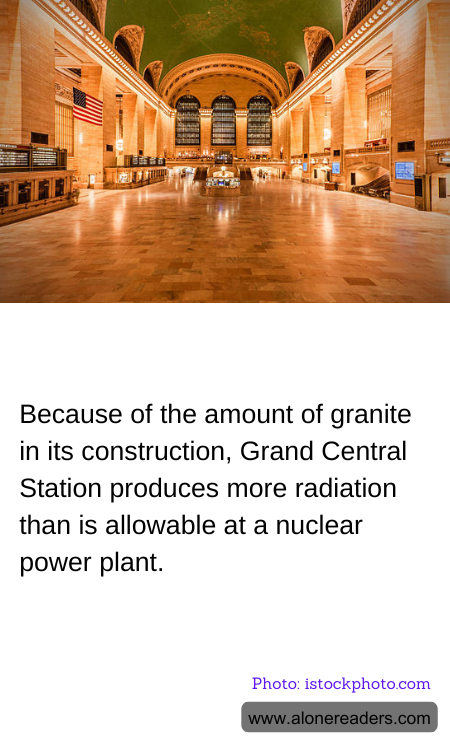
Grand Central Station in New York City is not only a marvel of architectural beauty and historical significance but also a fascinating case study in natural radiation. This iconic transportation hub, with its majestic Beaux-Arts design, is constructed with a significant amount of granite, a material known for its durability and aesthetic appeal. However, granite also contains trace amounts of uranium and thorium, which are naturally radioactive elements. As a result, Grand Central Station emits a level of radiation that, surprisingly, exceeds the permissible limits set for nuclear power plants.
To understand this phenomenon, it's essential to consider the nature of radiation and how it is regulated. Radiation is energy emitted from a source, and it can be either natural or man-made. In the case of granite, the radiation is natural and comes from the decay of radioactive elements within the rock. While this might sound alarming, it's important to note that the levels of radiation emitted by granite structures like Grand Central Station are generally considered safe for the public. The radiation levels are low and pose no significant health risk to the millions of people who pass through the station each year.
The comparison to nuclear power plants is intriguing and highlights the stringent safety standards imposed on the nuclear industry. Nuclear facilities are required to maintain radiation levels well below those found in many natural environments, including places like Grand Central Station. This is because nuclear power plants have the potential to release large amounts of radiation in the event of an accident, so they are subject to rigorous regulations to ensure public safety.
For the average person, the radiation exposure from spending time in Grand Central Station is negligible. In fact, people are exposed to natural background radiation every day from various sources, including the sun, the earth, and even the food we eat. The radiation from granite is just one small part of this background radiation. The levels are so low that they are not considered a health hazard, and they are far below the levels that would cause any harm.
In conclusion, while it is true that Grand Central Station emits more radiation than is allowable at a nuclear power plant, this fact is more a reflection of the strict regulations governing nuclear facilities than a cause for concern about the station itself. The radiation levels in Grand Central are a natural part of our environment and are not harmful to the public. This fascinating intersection of natural science and human engineering serves as a reminder of the complexities of our world and the ways in which we manage and understand the forces of nature.